
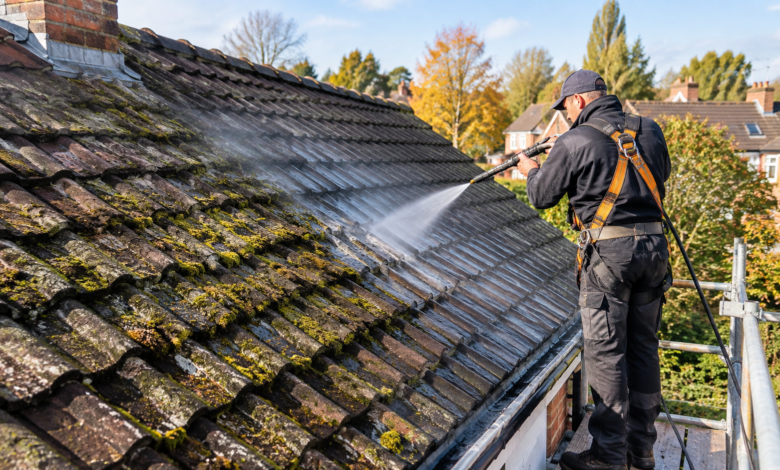
Roof Mold Cleaning Cost: What Homeowners Should Expect in 2026
Roof mold cleaning cost is an important consideration for homeowners who have noticed green growth, dark stains or moss spreading across their roof tiles. However, not every discoloured roof needs an expensive cleaning service. The right decision depends on the type of growth, the condition of the roofing materials and whether the problem affects drainage or the roof’s performance.
In the UK, professional roof cleaning typically costs around £8.50–£14 per square metre for common cleaning methods, according to Checkatrade’s April 2026 price guide. An average-sized semi-detached property may cost several hundred pounds to clean, with the final price depending on the roof’s size, pitch, accessibility and cleaning method.
This guide explains typical UK prices, the factors that influence quotations, differences between cleaning methods and ways to decide whether professional treatment is necessary. Prices are estimates rather than guaranteed quotations, and costs in other European countries can differ considerably.
What Is the Average Roof Mold Cleaning Cost in 2026?
For UK homeowners, a useful starting estimate is £8.50–£14 per square metre for professional roof cleaning. This is a general roof-cleaning range rather than a price exclusively for fungal mould removal. The final amount depends on the roof material, the extent of organic growth, access requirements and the work included.
The following figures provide an initial comparison.
| Cleaning service | Indicative UK cost |
|---|---|
| Pressure washing | £5–£12 per m² |
| Steam cleaning | £9–£13 per m² |
| Manual moss removal with biocide treatment | £8–£15 per m² |
| Soft washing | £12–£16 per m² |
| Scaffolding, where required | Additional cost; method and access dependent |
Source: Checkatrade’s UK roof-cleaning guide, updated April 2026. These figures are estimates, and the scaffolding rate is not included in the main cleaning prices.
These methods are not interchangeable. Pressure washing may be unsuitable for older or delicate tiles, while a chemical treatment requires careful selection and application. A contractor should assess the roof before recommending a method.
When comparing the roof mold cleaning cost for two properties, check whether the quotations cover the same work. One contractor might include moss removal, treatment and gutter clearance, while another may charge separately for each service.
What Factors Affect Roof Mold Cleaning Cost?
Several factors determine how much a roof-cleaning contractor charges. Understanding them helps you compare quotes fairly and avoid paying for unnecessary work.
1. Roof size and pitch
Larger roofs require more labour, cleaning solution and time. Roof pitch also matters because a steep roof is harder to access safely and may require additional equipment.
The floor area of a house is not the same as its roof area. A sloping roof generally covers more surface area than the building’s footprint, so ask contractors to explain how they calculate their measurements.
2. Type and amount of growth
Green algae, moss, lichen and fungal growth can look similar from the ground, but they may require different treatments.
Light surface staining might need less work than thick moss covering tile joints or obstructing drainage channels. Extensive growth can also make inspection more difficult, particularly if damaged tiles are hidden underneath.
The roof mold cleaning cost may increase when the contractor needs additional treatment, careful removal or extra time to protect the surrounding property.
3. Roofing material and condition
Clay tiles, concrete tiles, slate, metal sheets and flat-roof membranes all have different maintenance requirements. A method that is acceptable for one surface may damage another.
Older tiles may be brittle, while deteriorated flashing, cracked tiles or failing roof membranes may need repairs before cleaning can be considered.
For this reason, the cheapest cleaning technique is not necessarily the best choice. A suitable method should protect the existing roofing material rather than simply produce an immediately clean appearance.
4. Access and safety equipment
Scaffolding, access towers, lifting equipment and protective measures can add to the quotation. These requirements depend on the building’s height, roof shape, surrounding structures and the equipment needed to work safely.
A conservatory, narrow side passage or neighbouring property close to the roof may make access more complicated.
Ask whether access equipment, waste removal and gutter clearance are included in the quoted roof mold cleaning cost.
Which Roof Cleaning Method Offers the Best Value?
The best method depends on the roof material and the actual problem. A professional assessment is more useful than choosing a service based solely on its advertised price.
Manual removal and treatment
Some contractors remove moss or other growth mechanically and then apply a suitable treatment to help control regrowth.
This approach can be appropriate for certain roofs, but scraping must be carried out carefully because it can damage tiles or slates. Chemical treatments also require precautions to protect people, pets, plants and drainage systems.
Soft washing
Soft washing generally uses lower-pressure application and a suitable cleaning solution. It may be appropriate for some roofs where high-pressure cleaning presents an unnecessary risk.
However, the solution must be compatible with the roofing material, and the contractor should explain what the treatment can realistically achieve.
Pressure washing
Pressure washing can remove visible dirt quickly, but it is not appropriate for every roof. High-pressure water can damage tile surfaces, dislodge roofing materials and force water into vulnerable joints.
Marley, a UK roofing manufacturer, advises against high-powered jet washing on its roof tiles. Its guidance also notes that low to moderate moss or lichen growth is often not harmful under normal circumstances.
When comparing the roof mold cleaning cost of different methods, consider potential damage and future maintenance alongside the initial price.
Is Roof Cleaning Always Necessary?
No. Visible growth does not automatically mean a roof needs cleaning.
According to Marley, light to moderate moss and lichen growth on many pitched roofs is a natural part of ageing and is not normally harmful to the tiles. The manufacturer advises that removal may be unnecessary unless the roof is leaking or the growth obstructs gutters or outlets.
Cleaning or inspection may be more worthwhile when:
-
Moss is obstructing gutters or water outlets.
-
Growth is interfering with water drainage.
-
You notice cracked, loose or displaced tiles.
-
There are signs of leaks or moisture entering the roof space.
-
A qualified roofer identifies a maintenance problem that requires attention.
Dark staining alone is not proof of dangerous mould or structural damage. A visual assessment from ground level may not identify the underlying cause.
Before spending money, establish whether the problem is cosmetic, a drainage concern or evidence of a more serious roofing defect. If repairs are needed, cleaning alone will not resolve them.
How to Get an Accurate Roof Cleaning Quote
Online estimates can help establish a budget, but a tailored quotation is more reliable.
Follow these steps before hiring a contractor:
-
Describe the problem. Explain whether you have noticed moss, green algae, dark staining, blocked gutters or possible leaks.
-
Provide roof details. Share the property type, approximate roof size, number of storeys and roofing material if known.
-
Request an appropriate method. Ask why the recommended cleaning process suits your particular roof.
-
Check what is included. Confirm whether treatment, gutter clearance, waste collection and access equipment are covered.
-
Compare written quotations. Request itemised prices from several contractors and compare the same scope of work.
-
Ask about repairs and guarantees. Establish how damage discovered during cleaning will be reported and whether any treatment guarantee has specific conditions.
A contractor should not promise that cleaning will repair a leaking roof or eliminate all future organic growth. The roof’s condition, local climate, surrounding trees and exposure to shade can affect future maintenance requirements.
A reliable quotation should explain the work proposed, the exclusions and any additional charges that might arise.
Can You Reduce Roof Mold Cleaning Cost Safely?
You can control unnecessary expenses without compromising roof safety.
First, determine whether cleaning is needed at all. If the growth is minor and drainage remains clear, a professional inspection may help you avoid an unnecessary service.
Second, ask whether gutter clearance and other suitable maintenance tasks can be completed during the same visit. Combining services may reduce repeat access costs, although the contractor should itemise the charges so you can assess the actual saving.
Third, maintain gutters and remove accessible garden debris from ground level where practical. Overhanging branches may also contribute to shade and organic debris, so appropriate garden maintenance can help reduce accumulation on some roofs.
Avoid attempting to clean the roof yourself using a ladder, walking directly on tiles or spraying chemicals from an unsafe position. The UK’s Health and Safety Executive identifies roof work as a high-risk activity and recommends that work at height be properly planned and carried out by competent people using suitable precautions.
The lowest roof mold cleaning cost is not a genuine saving if the method causes leaks, damaged tiles or an avoidable accident.
Does Roof Mold Cleaning Cost Differ Across Europe?
Yes. Labour rates, local demand, property design, access equipment and building materials vary between European countries.
UK prices should not be treated as standard rates for Ireland, Germany, France, Spain or other European markets. Even within the UK, quotations can differ between regions and contractors.
For example, an older slate roof in a damp coastal location may require a different approach from a modern roof in a warmer region. The amount of shade, rainfall, roof pitch and existing surface condition can all influence the work required.
If you own a property outside the UK, obtain local quotations in the appropriate currency and confirm whether VAT or other applicable taxes are included. Check that the contractor understands the roofing material and relevant local safety requirements.
When budgeting internationally, focus on the scope of work and the condition of the roof rather than converting a UK price into another currency and assuming it represents a fair local rate.
Conclusion
The roof mold cleaning cost depends on more than the amount of visible growth. Roof size, pitch, material, accessibility, treatment and the condition of the existing covering all influence the final price.
For UK homeowners, published estimates provide a useful starting point, but local quotations are essential for accurate budgeting. Before arranging cleaning, establish whether the growth needs removing and select a method suitable for the roof.
Prioritise safe access, appropriate treatment and the long-term condition of the property. A well-judged maintenance decision can help you avoid unnecessary cleaning expenses while addressing genuine roofing problems before they become more serious.
Frequently Asked Questions
How much does roof mold cleaning cost for an average UK home?
UK roof cleaning typically costs £8.50–£14 per square metre for common methods, according to Checkatrade’s April 2026 guide. The total depends on roof size, access, the cleaning method and whether additional treatment or scaffolding is needed.
Is roof mold cleaning cost different from moss removal cost?
Yes, potentially. Moss removal focuses on moss, while cleaning may address algae, lichen, dirt or other surface growth. The price depends on the type of growth, the roof material and the treatment required.
Does roof cleaning prevent moss from returning?
No cleaning method can guarantee permanent prevention. Suitable treatments may help slow regrowth, but damp conditions, shade, nearby trees and local weather influence how quickly organic growth returns.
Is pressure washing the cheapest roof-cleaning option?
Pressure washing can have a lower initial price, but it is unsuitable for some roofing materials and can cause damage. Compare the recommended method, included services and potential repair risks rather than choosing solely on price.
Can I clean roof mould myself?
Roof cleaning can involve dangerous work at height, fragile tiles and potentially harmful chemicals. Homeowners should avoid climbing onto the roof and should use a competent professional when access or treatment creates a safety risk.
How often should a roof be cleaned?
There is no universal cleaning schedule for every property. Inspect the roof periodically from a safe position and arrange professional advice if you notice blocked drainage, damaged tiles or signs of water ingress. Routine cleaning may be unnecessary when growth is minor and the roof is functioning properly.



One Comment