Retaining Wall Material Types: 7 Options for Your Garden
Choosing the right retaining wall material can make a significant difference to the stability, appearance and maintenance of a sloping garden. Some materials suit traditional European properties, while others work better for contemporary landscaping, raised planting areas or sites that need effective drainage.
The best retaining wall material types depend on several factors, including the height of the wall, soil conditions, water pressure, available space and your budget. A material that performs well for a low garden border may be unsuitable for supporting a steep bank or protecting a building.
This guide compares seven common options, explains their advantages and limitations, and highlights what homeowners should consider before starting construction. It also covers drainage, durability, maintenance and situations where professional structural advice is necessary.
What Are the Main Retaining Wall Material Types?
Retaining walls hold back soil where the ground level changes. They help create usable garden terraces, support landscaped slopes and protect certain areas from soil movement.
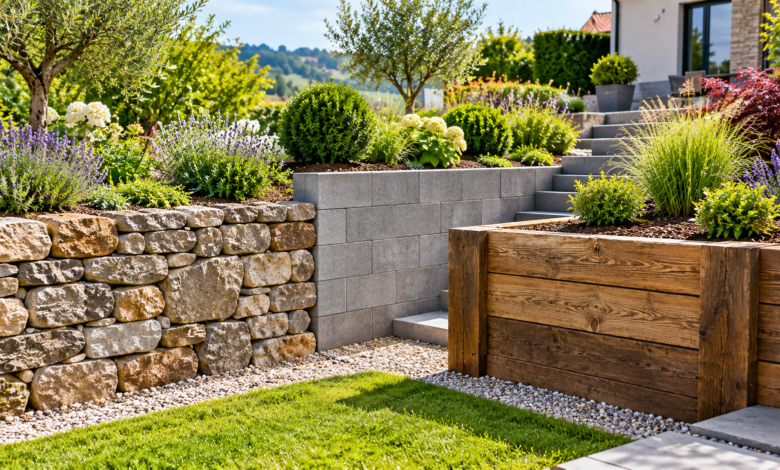
The main retaining wall material types include concrete blocks, poured reinforced concrete, natural stone, brick, timber, gabion baskets and interlocking segmental blocks. Each has different structural properties, installation requirements and maintenance needs.
The material alone does not determine whether a wall will be safe. Foundation design, wall dimensions, soil strength, groundwater, drainage and additional loads all influence performance.
1. Concrete Block Retaining Walls
Concrete blocks are widely used for residential landscaping because they are available in different sizes, finishes and configurations. Depending on the system, they can form a gravity wall or be incorporated into a reinforced structural design.
Advantages
-
Durability: Suitable concrete units can withstand outdoor exposure when correctly specified and installed.
-
Versatility: Blocks can create straight walls, corners and some curved layouts.
-
Appearance: Textured, smooth and stone-effect finishes suit different garden styles.
-
Availability: Standard blocks and specialist retaining wall systems are widely available in many European markets.
Limitations
Concrete blocks are heavy and require suitable foundations and careful installation. Ordinary hollow building blocks should not automatically be treated as retaining wall units.
For taller walls or locations carrying additional loads, reinforcement and engineered foundations may be necessary. Drainage must also be designed to prevent excessive water pressure behind the structure.
Among the retaining wall material types, concrete blocks are worth considering when you want a practical balance between appearance, strength and design flexibility.
2. Natural Stone Retaining Walls
Natural stone offers a traditional appearance that works particularly well in cottage gardens, rural properties and landscapes with existing stone features. Granite, limestone, sandstone and other locally available stones may be suitable, depending on their properties and exposure conditions.
Advantages
-
Natural colours and textures blend into garden landscapes.
-
Durable stone can provide a long service life.
-
Locally sourced materials may reduce transport requirements.
-
Dry-stone construction can allow water to pass through the joints.
Limitations
Stone walls require appropriate construction techniques, particularly when they retain substantial amounts of soil. Stone type, shape, wall thickness, foundation conditions and the arrangement of individual stones affect stability.
Mortared stone walls behave differently from dry-stone walls and need suitable drainage provisions.
Natural stone is one of the most attractive retaining wall material types, but labour costs can be significant when skilled masonry is required. Avoid assuming that a traditional-looking wall is structurally adequate simply because it has stood for many years.
3. Poured Reinforced Concrete
Poured reinforced concrete is commonly used where a retaining wall needs a carefully engineered structural solution. Steel reinforcement helps the concrete resist tensile stresses, while the wall and foundation are designed to withstand the forces acting on them.
Advantages
-
Suitable for many demanding retaining applications when properly engineered.
-
Can be designed for different heights, shapes and loading conditions.
-
Provides a solid structure with a relatively simple finished appearance.
-
Can be finished with cladding or suitable exterior coatings.
Limitations
Construction often involves excavation, formwork, reinforcement, concrete placement and curing. These requirements can make the project more expensive and disruptive than a simple landscaping wall.
Concrete also has environmental impacts associated with cement production. Where sustainability is a priority, discuss concrete specifications, material efficiency and locally available alternatives with the designer.
Of the retaining wall material types, reinforced concrete deserves consideration for challenging sites, but it is not a substitute for proper ground investigation and structural design.
4. Brick Retaining Walls
Brick retaining walls can complement traditional houses, older properties and gardens with existing brickwork. Their appearance is often a major reason homeowners select them.
However, bricks and mortar used for ordinary garden walls are not automatically suitable for retaining soil. The wall needs to be designed for lateral earth pressure and the effects of water.
Advantages
-
Matches traditional brick buildings and garden features.
-
Offers a neat, uniform appearance.
-
Provides flexibility in colour, bond patterns and detailing.
-
Can be durable when suitable materials and construction methods are used.
Limitations
Brickwork can develop cracks, deteriorate at the joints or suffer damage from frost and persistent moisture. A retaining wall also needs adequate foundations and a drainage strategy.
Brick may be suitable for a low, carefully designed garden wall, but substantial changes in ground level should be assessed by a qualified professional.
When comparing retaining wall material types, consider whether the finished appearance justifies the extra masonry labour and whether the selected brick is appropriate for its exposure conditions.
5. Timber Retaining Walls
Timber retaining walls are popular for raised beds, garden terraces and informal outdoor spaces. Railway-sleeper-style landscaping products and purpose-designed retaining timbers can create a warm, natural finish.
Advantages
-
Timber can be easier to handle than masonry units.
-
Installation may be relatively straightforward for small projects.
-
The material suits rustic and contemporary gardens.
-
Timber can work well for raised planting areas when correctly designed.
Limitations
Wood can decay, split or deteriorate when exposed to persistent moisture, soil contact and unsuitable installation conditions. Its service life depends on the timber species, treatment, exposure and detailing.
Use timber products intended for the proposed application, and check the manufacturer’s guidance regarding ground contact and environmental suitability.
Timber is among the more approachable retaining wall material types for small landscaping projects, but larger walls may require specialist design. Never assume that stacking heavy sleepers is sufficient to support a significant slope.
6. Gabion Retaining Walls
Gabion walls consist of wire mesh baskets filled with stones or other specified durable materials. The baskets are connected to form a retaining structure.
Their textured appearance suits contemporary gardens, rural properties and some larger landscape projects.
Advantages
-
Stone-filled baskets create a distinctive architectural finish.
-
The voids between stones can allow water to drain through the wall.
-
The system can accommodate some movement when correctly designed.
-
Suitable stone can sometimes be sourced locally.
Limitations
Gabions need appropriate foundations, basket specifications, connections and carefully selected fill. Wire coatings can deteriorate over time, particularly in aggressive environments, so durability and corrosion resistance matter.
Although gabion baskets can provide drainage through their stone fill, this does not eliminate the need to assess groundwater and drainage behind the wall.
Among the retaining wall material types, gabions are worth considering where their appearance, mass and drainage characteristics suit the site. Significant retaining structures still require appropriate engineering input.
7. Interlocking Segmental Retaining Wall Blocks
Interlocking retaining wall blocks are purpose-made units designed to fit together in a specified arrangement. Some systems rely on their weight, while others incorporate geogrid reinforcement or other engineered features.
Advantages
-
Consistent block dimensions simplify layout.
-
Various colours, textures and shapes are available.
-
Some systems accommodate curves and terraced designs.
-
Purpose-made components can simplify installation when the manufacturer’s instructions are followed.
Limitations
Not every block system is suitable for every wall height or soil condition. Reinforcement requirements, setbacks, foundation preparation and drainage depend on the selected system and site.
Follow the manufacturer’s technical specifications rather than combining unrelated blocks and components.
For homeowners comparing retaining wall material types, these systems can offer a practical landscaping solution when the wall height, ground conditions and intended loads fall within the system’s design limits.
How to Choose the Right Retaining Wall Material
The right choice depends on more than price or appearance. Assess the site before selecting materials.
| Factor | What to consider |
|---|---|
| Wall height | Taller walls generally require more careful structural design. |
| Soil conditions | Clay, loose fill and weak ground can affect stability. |
| Drainage | Water pressure can contribute to wall failure. |
| Appearance | Match the material to the house and garden. |
| Maintenance | Consider timber decay, masonry joints and metal corrosion. |
| Installation costs | Include excavation, foundations, drainage and labour. |
| Environmental impact | Consider local sourcing, durability and material quantities. |
Why Drainage Matters
Water accumulating behind a retaining wall can increase pressure and contribute to cracking, movement or collapse. A suitable design may include free-draining backfill, drainage aggregate, geotextile filtration and a properly designed outlet.
The exact arrangement depends on the wall and the ground conditions. Do not block existing drainage outlets or direct water onto neighbouring land.
The UK government’s guidance on retaining walls highlights the importance of safe construction and maintenance. The NHBC’s 2025 standards also identify engineering requirements for retaining structures in relevant new-home construction contexts.
Safety, Planning and Maintenance Considerations
Before building, check whether local planning requirements, building standards, boundary rules or other permissions apply. Requirements vary across European countries and may also differ between regions within a country.
In England, planning permission depends on the nature and location of the proposed work, so homeowners should consult their local planning authority where necessary.
For ongoing maintenance, inspect the wall periodically for:
-
New or widening cracks.
-
Bulging, leaning or displaced blocks.
-
Damaged drainage outlets.
-
Soil washing out around the foundation.
-
Rusting mesh or deteriorating timber.
-
Water collecting behind the wall.
If the wall begins moving, develops significant cracks or appears unstable, keep people away from the affected area and seek professional advice. Do not attempt to repair a potentially failing retaining structure without understanding the cause.
(FAQs)
What are the most common retaining wall material types?
Common options include concrete blocks, reinforced concrete, natural stone, brick, timber, gabion baskets and interlocking segmental blocks. The most suitable choice depends on wall height, soil conditions, drainage, appearance and structural requirements.
Which retaining wall material lasts the longest?
Properly specified and maintained reinforced concrete and suitable natural stone can provide long service lives. Actual durability depends on design, construction quality, exposure conditions, drainage and maintenance.
Are timber retaining walls cheaper than concrete walls?
Timber may cost less for some small landscaping projects, but prices depend on the timber specification, excavation, foundations, drainage and labour. Compare the complete installed cost rather than material prices alone.
Do retaining walls need drainage?
Many retaining walls need a designed method of managing water behind them. The appropriate solution depends on the soil, groundwater, wall construction and site drainage. Water pressure should never be ignored.
Can I build a retaining wall myself?
Some small, low landscaping projects may be suitable for competent DIY work when the system and site conditions permit it. Walls supporting significant soil loads, structures or slopes should receive appropriate professional assessment and design.
Which retaining wall material is best for a sloping garden?
Concrete blocks, natural stone, reinforced concrete and gabions can all suit sloping gardens in the right circumstances. The best option depends on the slope, soil stability, wall height, available space, drainage and desired appearance.