Change Window Glass Cost: What Should You Expect to Pay in 2026?
Replacing damaged window glass does not always mean buying an entirely new window. In many homes, a professional glazier can remove the damaged glass and install a replacement while keeping the existing frame. Understanding the change window glass cost can help homeowners budget properly and avoid paying for unnecessary window replacements.
The final price depends on several factors, including glass size, glazing type, frame condition, labour and accessibility. A small single-glazed pane is generally less expensive to replace than a large double- or triple-glazed unit. Prices also vary considerably between European countries. This guide explains typical UK costs, the main price differences, when professional assistance is necessary and how to choose the right replacement glass.
How Much Does It Cost to Change Window Glass?
The change window glass cost depends mainly on whether you have single, double or triple glazing. In the UK, published 2026 price guides suggest that a standard double-glazed replacement unit can cost approximately £55–£300 supplied and fitted, depending on its dimensions and specification.
For smaller repairs, replacing only the glass is often more economical than purchasing a complete window. However, larger units, specialist glass and emergency repairs can increase the final bill.
Here is an indicative UK price comparison:
| Glass type | Estimated replacement cost |
|---|---|
| Single glazing | £50–£130 |
| Double glazing | £55–£300 |
| Triple glazing | £200–£350 |
| Toughened glass | £80–£180 |
| Laminated glass | £150–£400 |
Indicative estimates from published UK trade-price guides, not guaranteed quotations. Actual prices depend on measurements, specification and labour.
The figures should be treated as budgeting guidance rather than fixed national rates.
What Factors Affect the Change Window Glass Cost?
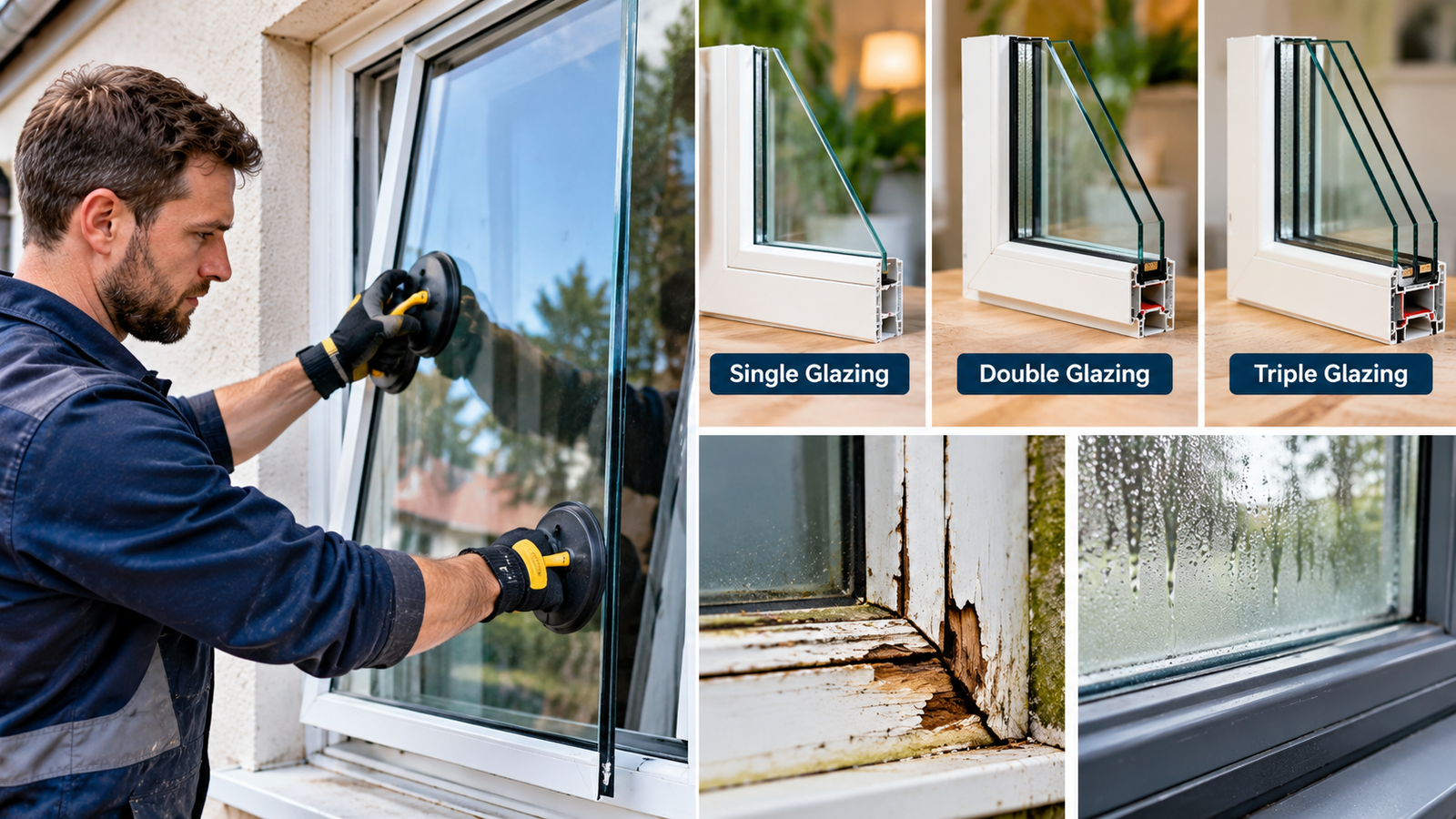
Several details can influence the change window glass cost. Two windows that look similar from inside a property may require different replacement materials and installation methods.
1. Window Size and Glass Thickness
Larger windows require more glass, which naturally increases material costs. Thick or specially manufactured glass can also cost more than standard clear glass.
A small bathroom window is generally simpler to replace than a large living-room window or floor-to-ceiling glazed panel.
Before requesting a quotation, provide the approximate width and height of the glass. A professional should confirm the final measurements before ordering a replacement unit.
2. Type of Glazing
The glazing specification has a significant influence on the overall price.
-
Single glazing: Uses one sheet of glass and is generally the simplest option.
-
Double glazing: Contains two panes separated by a sealed space, usually filled with air or an insulating gas.
-
Triple glazing: Uses three panes and is designed to improve thermal insulation and comfort.
-
Toughened glass: Heat-treated glass designed to provide safer breakage characteristics.
-
Laminated glass: Contains bonded layers that help hold broken pieces together.
Choosing the correct specification is more important than simply selecting the cheapest available glass.
3. Labour and Installation Charges
Professional installation contributes to the change window glass cost. A straightforward replacement in an accessible ground-floor window may require less labour than work involving an upper-floor apartment or an unusually shaped window.
The installer may also need to remove old sealant, clean the frame, inspect the glazing rebate and dispose of damaged glass.
Ask whether the quotation includes materials, labour, removal, disposal and VAT.
4. Frame Condition
A damaged or deteriorating frame can make replacement more complicated. Timber frames may have rot, while older uPVC frames can have damaged seals or hardware.
If the frame is structurally sound and properly maintained, replacing only the glass may be sufficient. If the frame is warped, leaking or seriously damaged, a complete window replacement might be the more sensible long-term option.
Does Double-Glazed Glass Cost More to Replace?
Yes. Double-glazed units generally cost more than basic single-glazed panes because they contain two sheets of glass and a sealed insulating cavity.
However, replacing double glazing does not necessarily mean replacing the complete window.
If one pane cracks or the unit develops condensation between the glass layers, a glazier can often replace the entire sealed glass unit while retaining the existing frame.
For more insights, read our previous article:
[Best Vinyl Window: How to Choose the Right Windows for Your Home]
What Happens When Double Glazing Becomes Misted?
Misting between two panes usually indicates that the sealed unit has failed, allowing moisture to enter the cavity.
Common warning signs include:
-
Persistent condensation between the panes.
-
A cloudy or misty appearance.
-
Reduced visibility through the window.
-
Deteriorating edge seals.
Cleaning the inside or outside surface will not remove moisture trapped inside the sealed unit. Replacing the affected unit is generally the appropriate solution.
Repairing Window Glass or Replacing the Entire Window?
One of the best ways to control the change window glass cost is to establish whether the frame actually needs replacing.
Glass-only replacement may be suitable when the existing frame remains stable, operates properly and has no significant damage.
A complete window replacement may be necessary when the frame is badly warped, rotten, damaged or no longer provides an adequate seal.
| Situation | Recommended option |
|---|---|
| Small cracked glass pane | Professional glass replacement |
| Failed double-glazed seal | Replace sealed glass unit |
| Damaged but repairable frame | Assess frame and glass |
| Rotten timber frame | Consider full replacement |
| Repeated water leakage | Investigate frame and installation |
For older properties, it is also worth considering whether replacement work could affect the building’s appearance or require additional permissions, particularly in conservation areas.
How to Reduce the Change Window Glass Cost
Replacing glass can become expensive if the wrong specification is ordered or additional work is discovered during installation. A little preparation can help avoid unnecessary expenses.
Compare Multiple Quotations
Contact at least two or three local glazing companies. Give each company the same measurements and glass requirements so that the quotations are easier to compare.
Do not automatically select the lowest price. Check the quality of materials, installation experience, warranty and whether the quotation includes disposal.
Replace Only the Damaged Unit
If your existing frame is in good condition, ask whether a glass-only replacement is possible. This may reduce the change window glass cost compared with installing an entirely new window.
Choose the Correct Glass Specification
Think about the location and purpose of the window before selecting replacement glass.
For example, privacy glass may be suitable for a bathroom, while acoustic glazing may be useful near a busy road. Energy-efficient glazing can also be worth considering when replacing older glass.
However, unnecessary upgrades can increase the initial cost without providing meaningful benefits for every property.
Check Your Home Insurance
Some home insurance policies include accidental glass damage or separate glass cover. Before arranging repairs, check your policy documents and excess.
If insurance applies, ask the insurer whether it requires an approved contractor or an inspection before work begins.
Is It Safe to Replace Window Glass Yourself?
Replacing window glass can involve sharp edges, heavy materials and specialist installation techniques. It is not always a suitable DIY project.
Small cracks can spread unexpectedly, and broken glass may cause serious cuts. Large double-glazed units are also difficult to handle safely without appropriate equipment.
Use a qualified professional when dealing with:
-
Large or heavy glass panels.
-
Upper-floor windows.
-
Double- or triple-glazed sealed units.
-
Toughened or laminated safety glass.
-
Windows close to doors or floor level.
In England, safety requirements apply to glazing in locations where people are likely to come into contact with the glass. The appropriate safety specification should be checked before replacement.
If a window is broken, keep children and pets away from the area. Do not attempt to remove unstable glass yourself. Arrange professional assistance and temporary protection where necessary.
Window Glass Replacement Costs Across Europe
The change window glass cost is not identical across Europe. Labour rates, local suppliers, building standards, transport expenses and glass availability differ between countries.
In the United Kingdom, prices are commonly quoted in pounds sterling. In countries such as Germany, France, Italy and the Netherlands, quotations are generally provided in euros.
For example, Dutch price guidance published in 2026 gives indicative figures of approximately €75–€350 per pane for custom-cut glass including installation, depending on the job. These figures should not be treated as representative of every European market.
When comparing quotations in different countries, consider:
-
Local labour and installation charges.
-
VAT and applicable taxes.
-
Glass thickness and insulation specifications.
-
Transport and disposal charges.
-
Building regulations and safety requirements.
For historic buildings, listed properties and conservation areas, check local requirements before changing the glazing specification.
Conclusion
Understanding the change window glass cost makes it easier to plan repairs and choose the right replacement option. In many cases, replacing the glass rather than the entire window can save money, provided the existing frame remains in good condition.
Compare professional quotations, check the glass specification and consider safety requirements before approving the work. For European homeowners, local labour rates, regulations and material availability should also be considered. A properly specified replacement can restore the window’s appearance, security and everyday performance without unnecessary renovation expenses.
Frequently Asked Questions
How much does it cost to change window glass in 2026?
In the UK, replacing a standard double-glazed unit can cost approximately £55–£300, depending on its size, glass specification and installation requirements. Specialist glazing may cost more.
Can you replace just one pane of double glazing?
A double-glazed window is normally manufactured as a sealed unit. If one pane breaks, the complete sealed unit is usually replaced rather than removing just one sheet of glass.
Is it cheaper to replace glass or the entire window?
Replacing only the glass is generally cheaper when the existing frame is in good condition. A complete window replacement may be necessary when the frame is damaged or no longer performs properly.
How long does window glass replacement take?
A straightforward glass replacement may take around one hour, although larger units, complicated installations and custom-made glass can require more time and potentially a second visit.
Does home insurance cover broken window glass?
Some home insurance policies cover accidental glass damage, but coverage depends on the policy. Check exclusions, excess payments and approved repair requirements before arranging the work.
Is double glazing worth replacing?
Replacing failed or damaged double glazing can restore the window’s appearance and insulating performance. Whether an upgrade is worthwhile depends on the condition of the existing window, the replacement specification and your household’s priorities.