
Home Maintenance
Dryer Duct Repair: How to Fix Vent Problems Safely and Prevent Future Issues
A damaged or restricted dryer duct can do more than slow drying. Poor airflow can increase heat inside the appliance, encourage lint accumulation, and, in some circumstances, increase fire risk. That is why dryer duct repair should be treated as both a performance and safety issue.
The good news is that some problems are straightforward to identify. A crushed hose, loose connection, visible lint blockage, or damaged external vent can often be spotted during a basic inspection. A qualified professional can handle more complicated problems inside walls, ceilings, or inaccessible ductwork. Manufacturer instructions should always take priority because venting requirements differ between dryer models.
What Is Dryer Duct Repair?
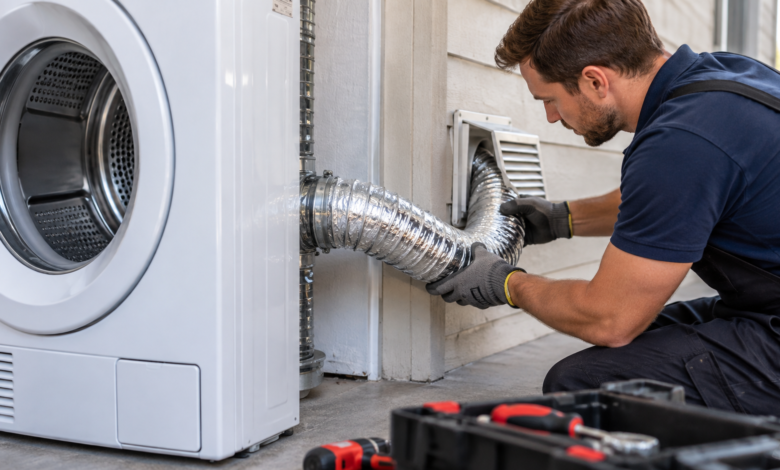
Dryer duct repair means correcting a problem with the duct or exhaust pathway that carries warm, moist air away from a vented tumble dryer. Depending on the fault, the work may involve reconnecting a loose section, replacing damaged ducting, removing an obstruction, or correcting a crushed or badly routed section.
A proper dryer duct repair should restore reliable airflow without adding bends, restrictions, or unsafe connections. Bosch installation guidance, for example, warns that long ducts, small diameters and excessive bends can increase resistance and reduce airflow.
Not every tumble dryer uses an external exhaust duct. Condenser and heat-pump dryers generally do not require the same type of external vent connection as a vented dryer. Before attempting any repair, identify the dryer type and consult its installation instructions.
Signs Your Dryer Duct Needs Attention
Several symptoms can indicate restricted or damaged ventilation.
Clothes Take Longer to Dry
A noticeably longer drying cycle can signal a problem. Blocked or restricted airflow prevents moisture and heat from leaving the appliance efficiently. Fire-safety guidance identifies unusually long drying times as one possible indication of a blocked filter or exhaust duct.
Clothes Feel Excessively Hot
Clothes that are much hotter than usual at the end of a cycle deserve attention. Excessive heat can occur when airflow is restricted, although the appliance itself may also have a mechanical or electrical fault.
If this happens repeatedly, stop relying on repeated drying cycles as a workaround. Check the lint filter and accessible ventilation, then arrange professional inspection if the problem remains.
The External Vent Flap Does Not Open Properly
For a vented dryer, the outside termination should allow exhaust air to leave the property. A flap that remains closed while the dryer operates can indicate poor airflow, an obstruction, or another installation problem.
Burning Smell or Unusual Heat
Never dismiss a burning smell as normal dryer operation. Stop using the appliance and have it checked if you notice burning odors, scorch marks, damaged wiring, or unusually hot clothing. UK electrical-safety guidance specifically recommends professional attention when these warning signs occur.
Common Causes of Dryer Duct Problems
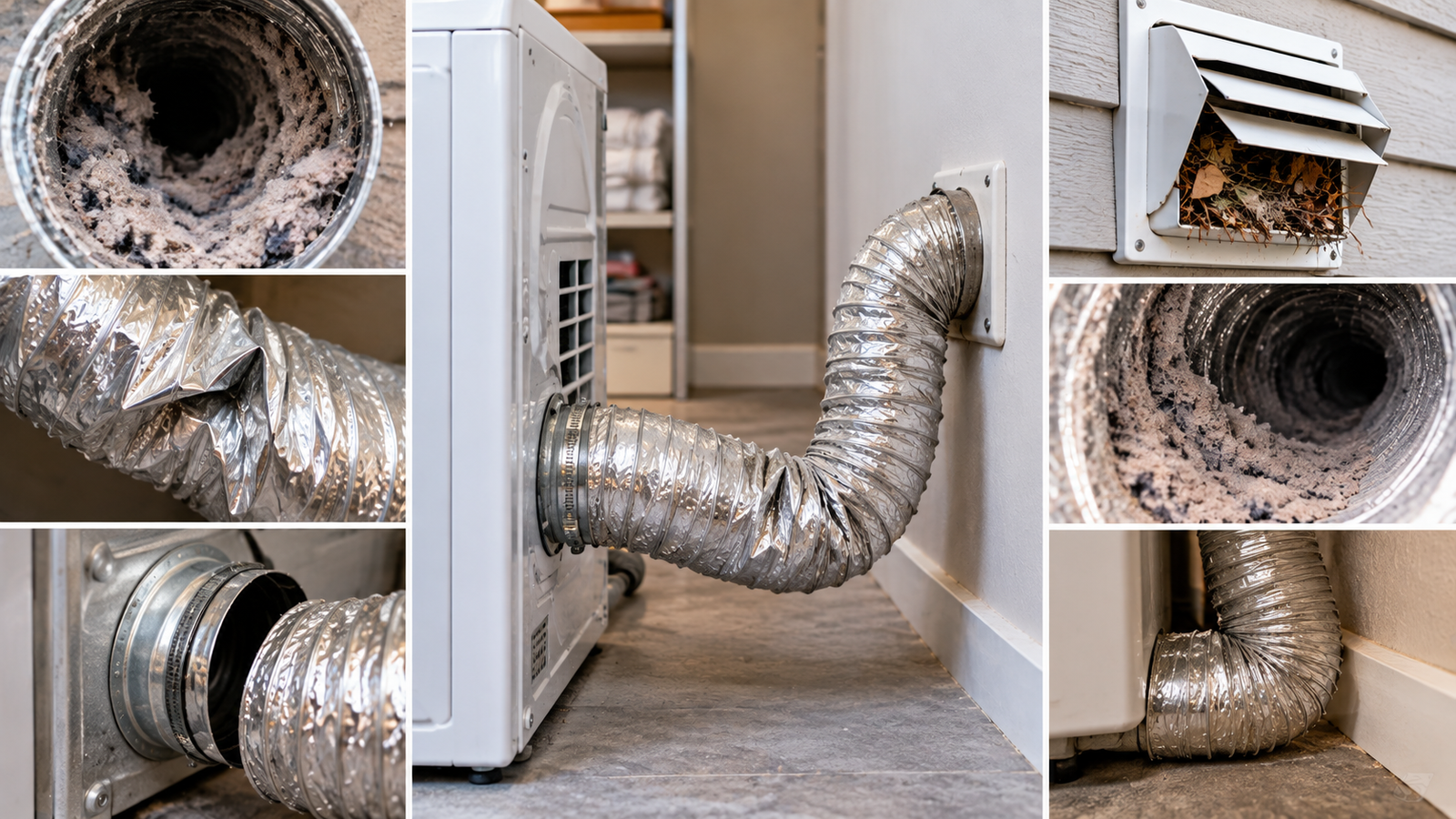
The most common causes of dryer duct problems include crushed ducting, accumulated lint, loose connections, excessive bends, and unsuitable materials.
A flexible duct can become compressed when a dryer is pushed too close to a wall. This reduces the passage available for exhaust air and may allow lint to accumulate. Fire services also warn that vent pipes should remain free from kinks, blockages, and crushing.
Lint is another major concern. Clean the lint filter after every load, and check and clean the exhaust pathway according to the appliance manufacturer’s instructions. NFPA guidance recommends periodically checking the exhaust vent and regularly cleaning the vent pipe.
Another problem is inappropriate duct material. Safety guidance commonly recommends suitable metal venting for dryers, while manufacturers may specify particular materials and dimensions for individual appliances. Don’t replace a damaged section with whatever hose fits; use a product approved for the appliance and installation.
For more insights, read our previous article: wood glue wood,
How to Approach Dryer Duct Repair Safely
If the problem appears to be limited to an accessible section, a basic inspection can help identify what is wrong.
Step 1: Switch Off the Dryer
Before inspecting the duct connection, turn off the dryer and disconnect it from the power supply, if appropriate. Allow the appliance to cool completely.
Do not work around an operating dryer to observe the duct. Safety should come before troubleshooting convenience.
Step 2: Inspect the Accessible Duct
Look for obvious crushing, sharp bends, holes, disconnected joints, or heavy lint accumulation. Also inspect the area where the duct connects to the dryer and the visible external termination.
Do not dismantle parts of the appliance cabinet unless the manufacturer specifically permits that procedure.
Step 3: Check the External Vent
If the dryer vents outdoors, inspect the external outlet for visible debris or obstruction. Make sure leaves, nesting material, or other debris do not block the vent.
The outside termination matters because a clear connection behind the appliance does not guarantee the entire exhaust route is unobstructed.
Step 4: Replace Damaged Sections When Necessary
Some duct damage is better repaired by replacement rather than patching. A permanently crushed, split, or unsuitable duct can continue restricting airflow even after a temporary fix.
The correct diameter, material, connection method, and maximum permitted duct length depend on the dryer and installation. Follow the manufacturer’s documentation rather than applying a universal measurement. Bosch documentation, for example, specifies airflow-related requirements and warns about pressure losses caused by bends and restrictions.
When Dryer Duct Repair Should Be Left to a Professional
Not every dryer vent problem is suitable for DIY work. Professional help makes sense when the duct disappears into a wall or ceiling, the route cannot be inspected, a wall penetration needs modification, or the appliance repeatedly overheats after you’ve checked the accessible ventilation.
Professional assistance is also appropriate if you suspect an electrical fault, a damaged appliance component, or an unsafe installation. Electrical Safety First recommends using a professional to install vented tumble dryers, and manufacturers may specify additional installation requirements.
Renters should also consider notifying the landlord or property manager before altering permanent ductwork. In an apartment or flat, the exhaust route may form part of the building rather than the individual appliance installation.
Repair or Replace the Dryer Duct?
A simple comparison can help:
| Problem | Likely approach |
|---|---|
| Loose accessible connection | Reconnect correctly |
| Minor accessible obstruction | Clean according to manufacturer guidance |
| Crushed or split duct | Replace damaged section |
| Repeated blockage | Investigate the full exhaust route |
| Duct inside wall with suspected obstruction | Professional inspection |
| Appliance overheating after vent checks | Stop using and seek qualified service |
The key point is that dryer duct repair is not simply about making the duct look intact. The completed installation must provide appropriate airflow and remain compatible with the manufacturer’s requirements.
How to Prevent Future Dryer Duct Problems
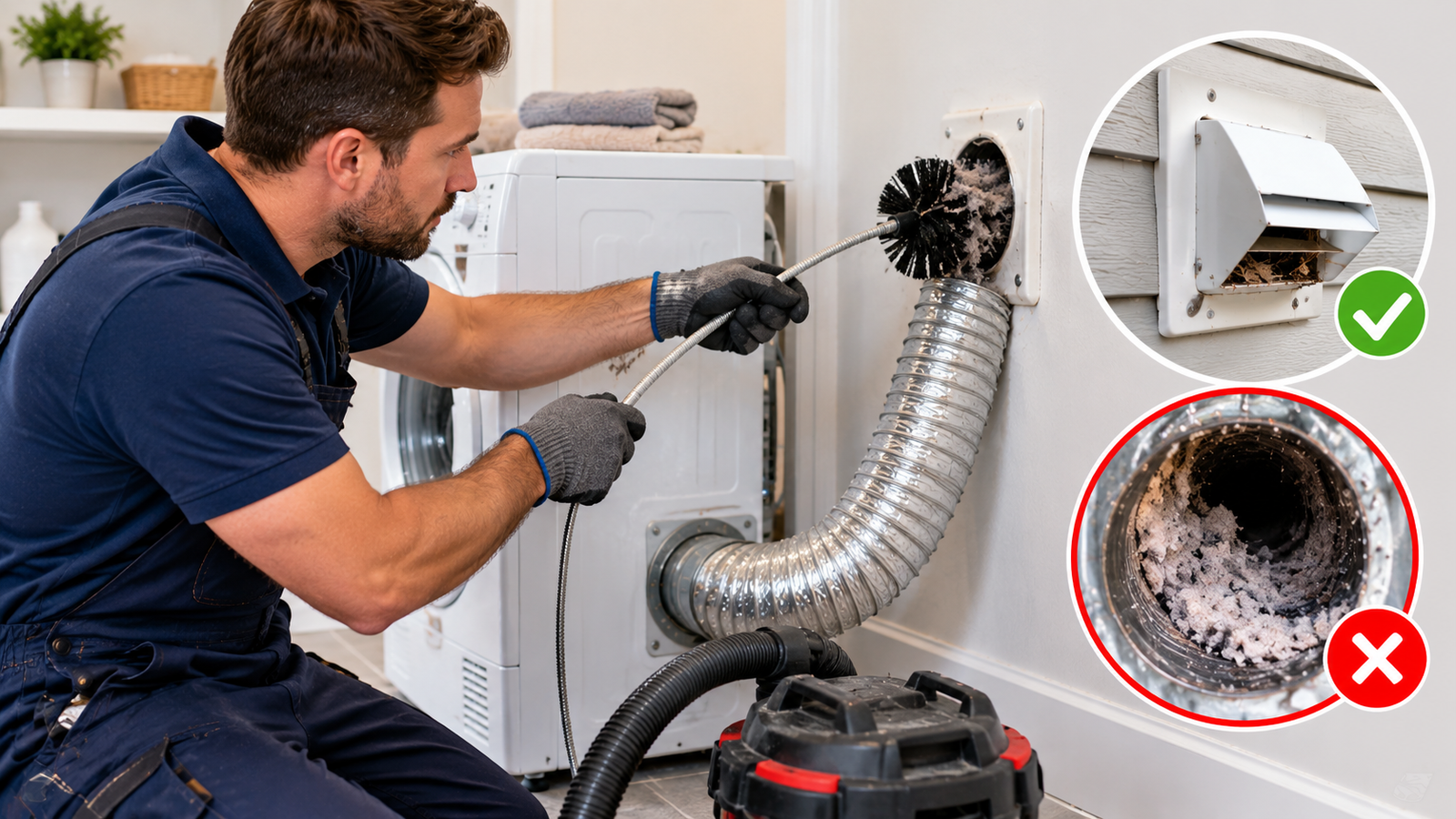
Prevention starts with regular lint removal. Clean the lint filter after every load and keep the area around the dryer free of accumulated fluff and combustible clutter. Fire services across the UK repeatedly recommend these measures.
Avoid pushing a vented dryer tightly against the wall if doing so crushes the exhaust connection. Keep the duct route as short and direct as the manufacturer’s installation instructions allow.
Do not cover ventilation openings, and do not use unsuitable ducting simply because it is inexpensive or easy to install. A properly installed system matters more than a quick temporary fix.
It is also sensible to watch for changes in drying performance. Longer cycles, unusually hot clothes, a burning smell, or an external vent that does not appear to discharge air normally should prompt an inspection rather than continued use.
Dryer Duct Safety in European Homes
European homes vary considerably. A detached house may have a short route through an external wall, while an apartment may have a more complicated installation. Older properties may also have different wall, ceiling, and ventilation arrangements than modern homes.
Country-specific building and appliance requirements can differ, so no single repair method should automatically apply across Europe. Always check local requirements alongside the manufacturer’s installation instructions.
For UK households, fire and electrical-safety organizations consistently advise keeping dryer vents clear, cleaning lint filters regularly, and avoiding unattended or overnight operation.
How Often Should Dryer Ducts Be Checked?
No universal inspection interval applies to every dryer and installation. The appropriate frequency depends on the appliance, duct design, usage, and manufacturer’s instructions.
A practical approach is to check the accessible duct whenever you notice reduced drying performance, visible damage, or unusual heat. Clean the lint filter after every load, and follow the appliance manufacturer’s guidance for deeper duct cleaning based on the installation’s condition.
Commercial or heavily used laundry installations may require a more formal maintenance schedule because they can accumulate lint more quickly.
When to Stop Using the Dryer
Stop using the dryer if you notice a persistent burning smell, smoke, visible scorching, serious overheating, damaged wiring, or another obvious safety concern. Do not keep running cycles in the hope that the problem will disappear.
If a dryer appears to be overheating because of restricted airflow, you may need to correct the ventilation, but persistent overheating can also indicate an internal appliance fault. A qualified appliance technician should investigate when the cause is uncertain.
Never leave a tumble dryer operating while you are asleep or away from home. UK fire-safety organizations repeatedly recommend this precaution.
Frequently Asked Questions
How do I know if my dryer duct needs repair?
Common warning signs include longer drying times, clothes becoming unusually hot, a blocked external vent, visible duct damage or a burning smell. These symptoms can also indicate an appliance fault, so a professional should assess persistent problems.
Can I fix a dryer duct myself?
Simple accessible problems may be manageable if the manufacturer’s instructions allow it, but complex installations should be handled professionally. Dryer duct repair becomes more complicated when ductwork runs through walls, ceilings, or inaccessible spaces.
Is a crushed dryer vent dangerous?
A crushed vent can restrict airflow and increase heat and lint accumulation. Fire-safety guidance specifically warns against kinked or crushed vent pipes, so correct damaged ducting rather than leaving it in place.
How often should I clean my dryer vent?
Clean the lint filter after every load. Inspect and clean the exhaust duct according to the manufacturer’s instructions and the condition of the installation. NFPA guidance recommends periodic inspection of the exhaust pathway.
Should I repair or replace damaged dryer ducting?
Replacement is often preferable when a duct is split, crushed, badly kinked, or made from unsuitable material. The replacement should meet the dryer manufacturer’s requirements for material, dimensions, and installation.
Why is my dryer still overheating after dryer duct repair?
If overheating continues after you correct the accessible exhaust route, stop using the dryer and arrange a professional inspection. The problem may involve an internal component, airflow restriction elsewhere, or an installation issue not visible from the appliance connection.
A good dryer ventilation system should provide clear airflow without unnecessary restrictions. Dryer duct repair is therefore best viewed as a safety and performance task rather than simply a cosmetic fix. Regular lint removal, proper ducting, and attention to warning signs can help keep operation safer. When the duct route is inaccessible, or the dryer continues to overheat, professional inspection is the safer choice.


One Comment