
Hydromulch Seed: How It Works and How to Grow a Healthy Lawn
Establishing a healthy lawn can be challenging when the soil dries quickly, rain washes seeds away or the ground slopes steeply. Hydromulch seed application offers a practical solution by combining grass seed with water and a protective fibre mulch, helping seeds remain in place while conditions support germination.
This method, commonly associated with hydroseeding, is useful for new lawns, roadside verges, large gardens and erosion-prone areas. However, the results depend on more than the application itself. Soil preparation, seed selection, moisture management and local weather all influence how well grass establishes.
Understanding how hydromulch seed works can help homeowners choose the right approach, avoid unnecessary costs and decide whether professional application is worthwhile. This guide explains the process, suitable seed mixtures, maintenance requirements, advantages, limitations and common mistakes to avoid.
What Is Hydromulch Seed?
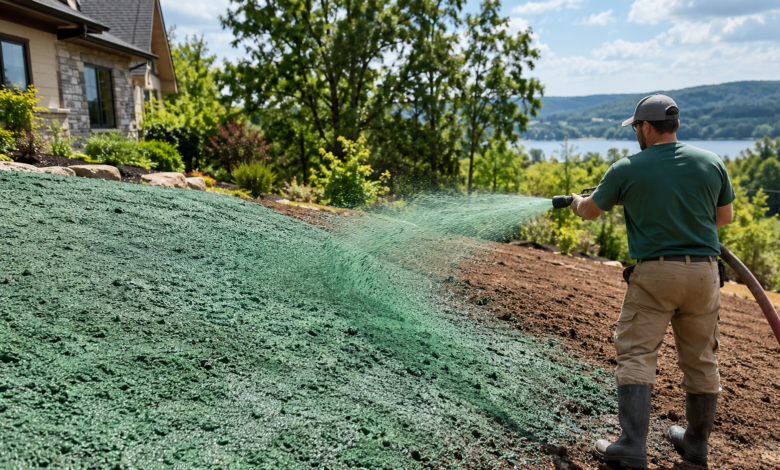
Hydromulch seed refers to grass seed applied with a water-based mulch mixture, either as part of a hydroseeding slurry or beneath a separately applied hydromulch covering. The mixture commonly contains water, cellulose or wood-fibre mulch and, depending on the application, seed, fertiliser and a binding agent called a tackifier.
The equipment sprays the material over prepared ground, creating relatively even coverage. The mulch helps retain moisture around the seed and reduces movement caused by wind or rain.
Hydroseeding and hydromulching are related but not identical. Hydroseeding generally applies seed within the slurry. Hydromulching can instead mean spraying a protective mulch layer over seed that has already been sown.
Both techniques can support grass establishment, particularly on large sites and slopes where conventional sowing is difficult. Their effectiveness still depends on appropriate soil conditions and aftercare.
How Does Hydromulch Seed Work?
The process creates a more favourable environment for seeds to absorb water, germinate and develop roots.
First, the water in the mixture moistens the seed and surrounding material. The fibre mulch then helps slow moisture loss from the soil surface. Depending on the product and application rate, a tackifier may also help bind the mulch to the ground, reducing movement during rainfall.
Once conditions are suitable, the seed begins to germinate. The emerging roots need to reach and establish in the soil to support continued growth.
A mulch covering cannot compensate for poor soil preparation, unsuitable seed or prolonged drought. Seeds must still have access to sufficient moisture, oxygen and suitable temperatures.
For example, a sloping garden in the UK may lose conventionally broadcast seed during heavy rain. A properly applied fibre mulch can help keep the seed and surface soil more stable, although severe runoff may still require additional erosion-control measures.
Benefits of Hydromulch Seed for Gardens and Landscapes
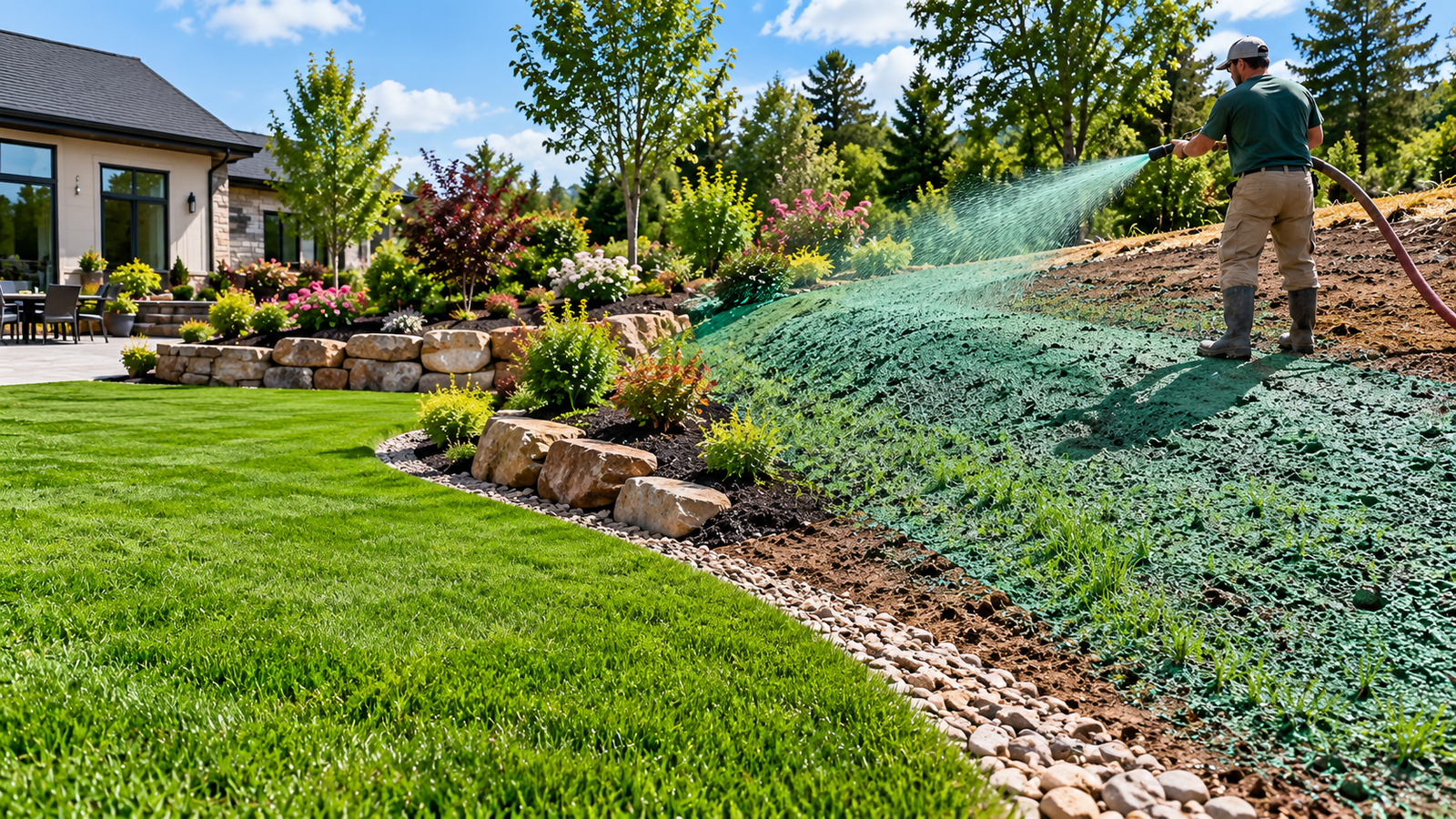
Hydromulch seed application offers several advantages when the method matches the site.
1. Improved moisture retention
Fibre mulch holds water and can slow moisture loss from the surface. This helps create more favourable conditions for germination, particularly where the top layer of soil dries quickly.
However, the covering does not eliminate the need for irrigation during dry weather.
2. Better protection against erosion
Rain and wind can displace grass seed before roots develop. Hydromulch can help stabilise exposed soil and reduce seed movement, making it useful on embankments, roadside verges and sloping gardens.
The degree of protection depends on slope, soil type, rainfall intensity, mulch coverage and the drainage conditions.
3. Faster application over large areas
Specialist equipment can distribute the mixture across extensive areas more quickly than many manual sowing methods. It can also reach some awkward or sloping locations.
For small, level gardens, a conventional seed spreader may be more economical.
4. More consistent coverage
A properly operated hydroseeder can provide relatively uniform distribution across a prepared surface. This can reduce bare patches caused by uneven hand-sowing, although poorly calibrated equipment or inconsistent application can still produce patchy results.
Choosing the Right Grass Seed Mixture
The seed mixture should suit the intended use of the area, local climate, soil and amount of sunlight. Hydromulch seed is an application method, not a particular grass variety.
Consider these options when selecting a mixture:
| Lawn or site type | Suitable considerations |
|---|---|
| Family garden | Hard-wearing grass varieties that tolerate regular foot traffic |
| Shaded garden | Grass varieties selected for low-light conditions |
| Sloping ground | Species suited to the local climate, supported by effective erosion control |
| Ornamental lawn | Fine-leaved varieties for a neat appearance |
| Native meadow | Locally appropriate native grasses and, where suitable, wildflowers |
| Dry or exposed site | Drought-tolerant species suited to the soil and regional climate |
In many UK lawn mixtures, perennial ryegrass and fescues are used for different combinations of durability, appearance and site suitability. The best blend depends on the particular growing conditions. The Royal Horticultural Society provides further guidance on choosing grass seed for different lawn types.
Before purchasing a mixture, check the seed composition, recommended sowing rate and suitability for the intended location. Avoid choosing a product solely because its packaging promises rapid growth.
How to Apply Hydromulch Seed Successfully
A successful application begins before the equipment arrives. The following steps explain the main stages of the process.
Step 1: Prepare the soil
Remove unwanted vegetation, large stones, rubbish and debris. Address persistent weeds before sowing, using an appropriate method for the site.
Break up compacted surface soil where practical, improve the ground if necessary and create a reasonably level seedbed. On slopes, avoid disturbing the soil more than necessary because excessive cultivation can increase erosion.
Soil testing may help identify nutrient or pH problems that could affect establishment.
Step 2: Select the seed and mulch
Choose a grass mixture appropriate for the site’s sunlight, soil, expected use and climate. Select a compatible mulch product intended for the application equipment.
The contractor or product manufacturer should specify suitable application rates for the seed, mulch and any additional materials. Do not assume that increasing the amount of mulch will improve the outcome; excessive coverage can interfere with seed establishment.
Step 3: Apply the mixture evenly
Hydroseeding equipment combines the specified materials in a tank and sprays the slurry across the prepared area.
For larger or steep sites, a professional contractor can assess access, slope, drainage and equipment requirements. Small garden projects may be better served by conventional seeding with an appropriate protective covering.
Step 4: Keep the surface moist
After applying hydromulch seed, monitor the soil regularly. Water gently when necessary to prevent the seedbed from drying out, especially during warm or windy weather.
Avoid applying water so forcefully that it displaces the mulch or washes soil downhill. Irrigation frequency depends on rainfall, temperature, soil drainage and the grass species.
Step 5: Protect developing grass
Limit foot traffic and keep pets away from newly seeded ground where possible. Watch for bare areas, runoff damage and signs that the surface is drying out.
Do not mow until the grass has developed sufficiently, and follow the guidance for the selected seed mixture. Cutting too early or too short can damage young plants.
When Is the Best Time to Apply Hydromulch Seed?
The best application period depends on the grass species, local climate and availability of water.
In the UK, early autumn and spring are commonly suitable periods for establishing many cool-season lawn grasses. Early autumn often provides favourable soil temperatures and more reliable moisture, while spring sowing may require closer watering if conditions become dry.
Avoid applying seed when the ground is waterlogged, frozen or likely to experience severe runoff. Prolonged hot, dry weather can also make establishment difficult without reliable irrigation.
Across Europe, timing varies considerably. Northern regions may have shorter growing seasons, while warmer southern areas can experience extended summer drought. Choose a period when the selected species can germinate and establish under local conditions.
How Long Does Hydromulch Seed Take to Grow?
Germination time varies with the grass species, seed quality, soil temperature, moisture and planting conditions.
Some lawn grasses begin emerging within roughly one to two weeks under favourable conditions, while other varieties take longer. Visible green growth does not mean the lawn is fully established.
Hydromulch seed may produce uneven results if the soil is compacted, the seedbed dries out or the application is poorly distributed. Some areas may therefore require reseeding.
A lawn generally needs several months to develop sufficiently for regular use, with the exact period depending on the species and growing conditions. Avoid promising a finished lawn within a fixed number of days.
Hydromulch Seed Cost: What Affects the Price?
The cost of hydromulch seed installation varies according to the area being treated, site accessibility, slope, seed mixture, mulch type, soil preparation and local labour rates.
Large projects may benefit from economies of scale, while small gardens can incur relatively high minimum contractor charges. Difficult access, substantial ground preparation and additional erosion-control requirements can increase the total.
When comparing quotations, ask whether the price includes:
-
Soil preparation and removal of existing vegetation.
-
Grass seed and mulch materials.
-
Fertiliser or tackifier, if required.
-
Application equipment and labour.
-
Initial watering instructions and follow-up advice.
-
Repairs or reseeding if establishment is unsuccessful.
Compare the full scope of work rather than the headline price alone. Conventional lawn seeding may be less expensive for small, level gardens, whereas hydromulching can be more practical for large or difficult sites.
Common Hydromulch Seed Mistakes to Avoid
Several preventable mistakes can undermine an otherwise suitable application.
Poor soil preparation: Compacted or unsuitable soil can restrict root development. Prepare the surface properly before applying the mixture.
Choosing the wrong grass: A mixture designed for sunny, high-use lawns may perform poorly in deep shade or on dry ground.
Insufficient watering: If the seedbed dries during germination, establishment can fail. Monitor moisture and adjust watering to the weather.
Applying too much mulch: Excessive material can interfere with seed-to-soil contact or hinder emerging seedlings. Follow the product’s recommended application rate.
Ignoring drainage: Concentrated runoff can carry away mulch, seed and topsoil. Correct significant drainage problems before treatment.
Using unsuitable fertiliser: Applying excessive nutrients can damage plants or encourage unwanted growth. Base fertiliser decisions on soil conditions and product guidance.
If erosion is severe or the slope is unstable, seek advice from a suitably qualified landscaping or erosion-control professional before proceeding.
Conclusion
Hydromulch seed application can be an effective way to establish grass, protect exposed soil and cover large or sloping areas. Its success depends on choosing suitable seed, preparing the ground correctly and maintaining appropriate moisture during establishment.
For a small, level garden, traditional sowing may provide better value. For a large site or an erosion-prone slope, professional hydroseeding or hydromulching may justify the additional expense. Assess the site before choosing a method, and remember that no application technique removes the need for proper aftercare.
(FAQs)
Is hydromulch seed better than regular grass seed?
Not necessarily. Hydromulching can offer advantages on large or sloping sites by helping retain moisture and stabilise seed. Conventional sowing is often more economical for small, level gardens. The better method depends on the site and aftercare.
Can hydromulch seed grow on a steep slope?
Yes, it can help establish grass on many slopes, provided the seed mixture, application and erosion-control measures suit the conditions. Very steep or unstable ground may require additional professional stabilisation.
Does hydromulch seed need watering?
Yes. The mulch helps retain moisture but does not replace watering when rainfall is insufficient. Keep the seedbed appropriately moist without creating runoff or waterlogging.
Can I apply hydromulch seed myself?
Small projects may be possible with suitable equipment and compatible products. Larger areas, difficult slopes and sites with substantial erosion risks are generally better assessed by an experienced contractor.
When can I walk on a newly hydroseeded lawn?
Keep foot traffic to a minimum during germination and early establishment. Wait until the grass is sufficiently rooted and resilient, following the seed supplier’s or contractor’s advice before allowing regular use.
Can hydromulch seed be applied in autumn?
Yes. Autumn can be suitable for many cool-season grasses, particularly when the soil remains warm enough for germination and moisture is adequate. Avoid conditions that are excessively wet, frozen or likely to cause substantial runoff.


One Comment