Half Round Gutters: Benefits, Materials, Sizes and Maintenance
Rainwater management is an essential part of protecting a house from damp, staining and avoidable exterior damage. Half round gutters are a popular roof drainage option because their curved shape combines a traditional appearance with practical water collection. They can suit period properties, cottages, detached houses and many contemporary homes, provided the system is correctly sized for the roof.
Choosing the right gutter involves more than appearance. Material, roof area, rainfall intensity, outlet positions and maintenance requirements all influence performance. A system that works well on a small extension might not provide enough capacity for a larger roof.
This guide explains how half-round guttering works, which materials and sizes to consider, how it compares with square guttering, and how to maintain it. The advice is intended for homeowners, landlords and property managers across the UK and wider Europe, where construction practices and local requirements can differ.
What Are Half Round Gutters?
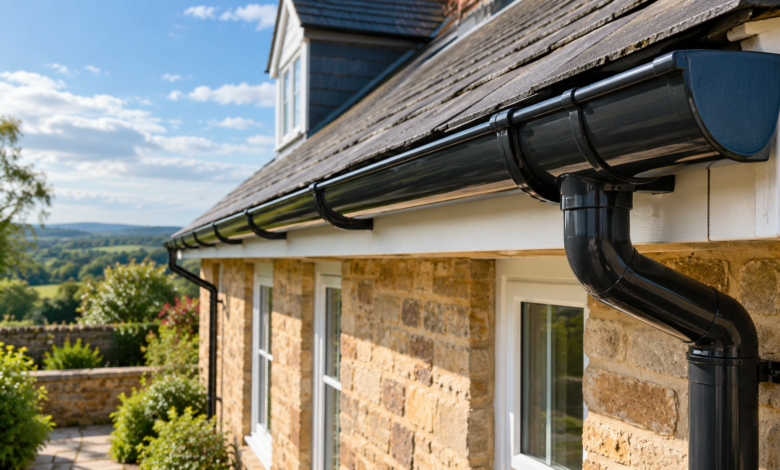
Half round gutters are rainwater channels with a curved, approximately semicircular cross-section. Installed along the lower edge of a roof, they collect water running off the tiles or other roof covering and direct it towards outlets and downpipes.
The downpipes then carry rainwater towards an appropriate drainage point, such as a surface-water drain or a rainwater collection system.
Unlike square or rectangular profiles, half-round guttering has a smooth, rounded interior. Its traditional shape makes it a common choice for homes where a simple, understated exterior finish is preferred.
These gutters are available in several materials, including uPVC, aluminium, steel and cast iron. The appropriate option depends on the building’s design, exposure to weather, maintenance expectations and available budget.
Main Benefits of Half Round Gutters
1. A classic appearance
The curved profile complements many traditional European properties, including brick houses, stone cottages and older buildings. It can also work well on modern homes where the owner wants a less angular roofline.
Colour options vary by manufacturer and material. Black, white, grey, brown and anthracite are common choices in UK uPVC systems, while coated aluminium systems offer additional finishes.
2. Practical rainwater drainage
When correctly sized and installed, half-round guttering collects roof runoff and directs it towards downpipes. Its rounded channel can help water move through the system without the internal corners found in square profiles.
However, shape alone does not determine drainage performance. Gutter dimensions, roof area, rainfall intensity, outlet capacity and the condition of the pipework all matter.
3. A choice of materials
Homeowners can select an economical plastic system or invest in a metal alternative for a particular architectural style or durability requirement.
For example, uPVC is often selected for ordinary residential projects because it is lightweight and relatively straightforward to maintain. Aluminium offers corrosion resistance, while cast iron can be suitable for buildings where a traditional metal appearance is important.
4. Straightforward maintenance
Routine inspections and cleaning help keep the channel and outlets clear. Many domestic systems also have readily available brackets, connectors, end caps and replacement sections.
These advantages make half round gutters a practical option for many properties, but they still require suitable support, secure joints and correctly positioned outlets.
Which Materials Are Best for Half Round Gutters?
The best material depends on the building and the conditions in which the gutter will operate.
| Material | Main advantages | Considerations |
|---|---|---|
| uPVC | Lightweight, affordable and low maintenance | Can expand and contract with temperature |
| Aluminium | Lightweight and corrosion-resistant | Higher initial cost than many plastic systems |
| Steel | Strong and available in different finishes | Coating condition and corrosion protection matter |
| Cast iron | Traditional appearance and substantial construction | Heavy and may require specialist installation |
uPVC guttering
uPVC is a common choice for residential roof drainage in the UK. It is generally economical, does not rust and can be cleaned without specialist treatments.
Expansion and contraction must be accommodated at joints according to the manufacturer’s instructions. Using incompatible components or incorrectly securing the system can cause leaks or distortion.
Aluminium guttering
Aluminium suits homeowners looking for a lightweight metal option with a clean finish. Coated aluminium systems are available in several colours and are used on both traditional and contemporary properties.
Check compatibility with adjacent metals, roof materials and fixings. In particular, aluminium should not be installed in a rainwater flow path beneath copper materials unless the system manufacturer confirms a suitable arrangement.
Steel and cast iron
Steel systems can provide a strong, neat appearance, but protective coatings and joints need appropriate care. Cast iron is often considered for heritage properties because of its traditional appearance and substantial construction.
For listed buildings or properties in conservation areas, check whether particular materials or external alterations require approval before replacing the existing system.
How to Choose the Right Gutter Size
Correct sizing is essential for effective roof drainage. A gutter that is too small may overflow during heavy rainfall, potentially wetting external walls and contributing to damp problems.
Standard domestic half-round profiles include sizes around 112 mm, although other dimensions are available. Metal systems can use different sizing conventions, so measurements should not be compared without checking the manufacturer’s specifications.
Before selecting a system, consider:
- Roof area: Larger roof surfaces can collect more rainwater.
- Roof pitch: Steeper roofs may deliver runoff to the gutter more quickly.
- Local rainfall: Intense rainfall can exceed the capacity of an undersized system.
- Outlet positions: The number and location of downpipes influence how efficiently water leaves the gutter.
- Roof layout: Valleys and adjoining roof sections can concentrate runoff at particular points.
Manufacturers publish technical information for their systems. For example, PREFA offers aluminium half-round guttering in several dimensions, while Wavin provides half-round profiles designed for domestic roof drainage.
Use the selected manufacturer’s capacity tables or ask a qualified roofing or rainwater drainage professional to assess the roof. Do not assume that a standard size will suit every house.
Half Round Gutters vs Square Gutters
Both profiles can provide effective roof drainage when properly designed. The main differences are appearance, available capacity and the way each system fits the property.
| Feature | Half-round profile | Square profile |
|---|---|---|
| Appearance | Rounded and traditional | Angular and contemporary |
| Suitable properties | Traditional and modern homes | Modern homes and other suitable buildings |
| Water capacity | Depends on size and system design | Some profiles offer greater capacity |
| Cleaning | Generally accessible with routine cleaning | Corners may collect debris |
| Best selection method | Assess roof runoff and design | Assess roof runoff and design |
Half-round guttering is a sensible choice when its capacity meets the property’s drainage requirements and its appearance suits the building.
Square guttering may be preferable where a more angular finish is desired or a suitable model provides the required flow capacity. Neither profile is automatically better for every property.
How to Maintain Half Round Gutters
Regular maintenance helps prevent blockages, leaks and overflow. The frequency required depends on nearby trees, local weather, roof debris and the surrounding environment.
Step 1: Inspect the system
Look for visible cracks, loose brackets, sagging sections, separated joints and staining beneath the gutter. Check for water overflowing during rainfall, as this may indicate a blockage, insufficient capacity or an installation problem.
Step 2: Remove leaves and debris
Leaves, moss and small branches can obstruct the channel or outlet. Gutter cleaning is particularly useful during autumn and after strong winds.
Use a suitable professional service if the gutters are high, difficult to access or close to electrical hazards. Avoid leaning from an unsecured ladder or reaching sideways from a height.
Step 3: Check outlets and downpipes
A clear gutter can still overflow if its outlet or downpipe is blocked. Look for visible obstructions and check whether rainwater drains away normally.
If the pipe remains blocked or water backs up repeatedly, a drainage professional can investigate the cause.
Step 4: Examine joints and supports
Look for leaking connections, missing end caps, damaged seals and loose brackets. Minor repairs should follow the system manufacturer’s instructions, particularly where thermal movement must be accommodated.
Step 5: Monitor drainage after rain
After maintenance, observe the system from a safe position during rainfall. Persistent overflow, water running behind the gutter or damp patches on walls may indicate a problem requiring further investigation.
For more seasonal advice, see a future guide to [seasonal home maintenance] and [preventing damp and mould].
Common Problems and How to Prevent Them
Even well-made half-round gutters can develop problems if debris accumulates, fittings deteriorate or the installation is unsuitable.
Overflowing water: Blockages, heavy rainfall, inadequate capacity or poorly positioned outlets can cause overflow. Clear accessible debris safely and arrange a capacity assessment if the issue continues.
Leaking joints: Seals can deteriorate, fittings can become misaligned and components can move with temperature changes. Use compatible replacement parts rather than relying on an unsuitable sealant.
Sagging gutters: Damaged brackets, inadequate support or excessive debris and standing water can contribute to sagging. A professional should assess persistent movement or structural damage.
Corrosion or surface damage: Metal systems may deteriorate if their protective finish is damaged or incompatible materials are used. Follow the manufacturer’s maintenance recommendations.
Damp external walls: Overflowing or disconnected gutters can allow rainwater to run down masonry. Repairing the drainage problem is important, but existing damp may also have other causes and should be assessed separately.
What Do Half Round Gutters Cost?
The total cost depends on the material, gutter dimensions, property size, number of corners and outlets, access requirements and labour rates.
uPVC generally offers a lower-cost starting point, while aluminium and cast iron may require a larger initial investment. Difficult access, repairs to fascia boards and replacement of damaged downpipes can increase installation costs.
When comparing quotations, ask whether the price includes brackets, joints, outlets, downpipes, removal of the old system, waste disposal and any necessary repairs.
Request a written quotation based on the actual roof layout rather than comparing prices per metre alone. Local prices and installation requirements vary across European countries.
Conclusion
Half round gutters combine a familiar appearance with practical rainwater management, making them suitable for many European homes. The most important decisions involve choosing the correct material and capacity, ensuring compatible fittings and maintaining clear outlets and downpipes.
Inspect the system regularly, address leaks promptly and seek professional advice when drainage problems persist. A correctly selected and maintained gutter system can help direct roof runoff away from the building and reduce avoidable exterior water damage.
(FAQs)
Are half round gutters suitable for most houses?
They are suitable for many residential properties, including traditional and contemporary homes. The correct size, material and outlet arrangement must match the roof area and expected rainfall.
What is the most common half-round gutter size in the UK?
A 112 mm profile is common in domestic uPVC systems, often paired with a compatible 68 mm round downpipe. Larger roofs or different drainage requirements may need another size.
Are half round gutters better than square gutters?
Neither is universally better. Half-round profiles offer a traditional appearance and practical drainage, while some square profiles provide higher capacity. The correct choice depends on roof runoff and manufacturer specifications.
How often should gutters be cleaned?
Inspect them at least twice a year as a starting point, particularly in spring and autumn. Homes surrounded by trees or exposed to frequent storms may need more frequent checks.
Can I install half-round guttering myself?
A competent DIYer may be able to install a straightforward system by following the manufacturer’s instructions. Work at height, complex roof layouts, damaged fascias and persistent drainage problems are better handled by qualified professionals.
How long do half round gutters last?
Service life varies with material, product quality, installation, exposure and maintenance. Plastic, aluminium, steel and cast iron have different durability characteristics, so check the manufacturer’s stated service life and warranty rather than relying on one lifespan for all systems.