
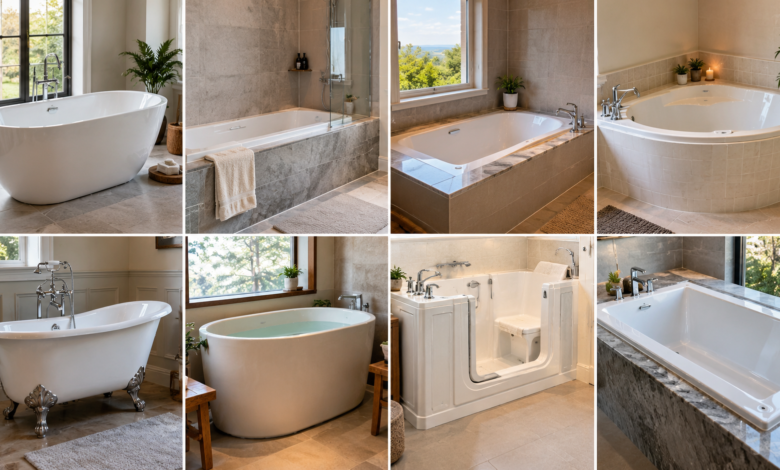
Types of Bathtubs: 8 Popular Styles and How to Choose the Right One
Choosing between the different types of bathtubs depends on your bathroom size, bathing habits, budget and installation requirements. Some designs are made for compact family bathrooms, while others create a luxurious focal point or provide easier access for people with limited mobility.
The main options include alcove, freestanding, drop-in, undermount, corner, soaking, walk-in and clawfoot bathtubs. Although these categories sometimes overlap, each offers different advantages in terms of space, comfort, appearance and maintenance.
For European homeowners and renters, the existing plumbing layout, floor strength, hot-water supply and availability of replacement parts can also influence the decision. A bathtub that looks attractive in a showroom may not be practical in a small flat or an older property.
This guide explains the most popular bathtub designs, their benefits and disadvantages, the materials available and the factors to consider before purchasing one.
What Are the Main Types of Bathtubs?
The main types of bathtubs are distinguished by how they are installed, how much space they occupy and the bathing experience they provide. Alcove models are practical for everyday family use, freestanding designs suit bathrooms with more floor space, and walk-in models can make entering and leaving the bath easier.
Some categories describe installation methods, such as drop-in and undermount, while others describe features, such as soaking depth or a built-in access door. Understanding this distinction makes it easier to compare suitable products.
1. Alcove Bathtubs

One of their biggest advantages is versatility. An alcove bath can often accommodate a shower above it, making it useful in homes where there is not enough room for separate bathing and showering areas.
Advantages:
-
Makes efficient use of available floor space.
-
Works well in family bathrooms.
-
Can combine bathing and showering.
-
Usually requires less decorative construction than a custom built-in bath.
Disadvantages:
-
Offers fewer placement options than a freestanding model.
-
The surrounding walls and seals need regular maintenance.
-
The available size is limited by the existing recess.
For many flats and smaller houses, an alcove bathtub is a sensible starting point. Before replacing an existing bath, measure the recess and check the drain position to avoid unnecessary plumbing changes.
2. Freestanding Bathtubs

These are among the most visually distinctive types of bathtubs, with options ranging from simple oval shapes to sculptural designs with narrow bases.
Advantages:
-
Creates a strong visual focal point.
-
Offers flexibility in placement where plumbing allows.
-
Comes in many shapes, finishes and materials.
-
Can provide a comfortable bathing area in a spacious bathroom.
Disadvantages:
-
Requires sufficient clearance around the bath.
-
Plumbing and taps may need additional planning.
-
Cleaning behind the bath can be difficult.
-
Heavy models may require an assessment of floor capacity.
Freestanding baths are best suited to rooms with enough circulation space. In an older European property or an upper-floor flat, check the filled bathtub’s total weight and the floor’s capacity before choosing a heavy stone or cast-iron model.
3. Drop-In Bathtubs

This arrangement allows homeowners to coordinate the bathtub with the rest of the bathroom. It can also provide a broad ledge for toiletries, although the surrounding surface must be designed to manage splashes and moisture.
Advantages:
-
Supports customised bathroom designs.
-
Offers room for a wide surrounding deck.
-
Can be incorporated into larger bathing areas.
-
Provides a built-in appearance without exposing the entire tub.
Disadvantages:
-
Requires a properly constructed platform.
-
Waterproofing and sealing need careful attention.
-
Plumbing access must be planned before installation.
-
Additional building work can increase the overall project cost.
A drop-in bath is worth considering during a major bathroom renovation. For a straightforward replacement where the existing layout works well, a simpler installation may be more economical.
4. Undermount Bathtubs

An undermount bathtub is installed beneath a surrounding deck, so the rim is concealed by the finished surface. Unlike a drop-in bath, which normally has a visible rim resting on the deck, an undermount model creates a more continuous appearance.
These types of bathtubs are particularly suitable for bathrooms with carefully coordinated stone or solid-surface finishes.
The main benefit is a clean, streamlined design. Water and small amounts of debris can be easier to wipe from the surrounding deck into the bath, depending on the edge detail.
However, installation is more demanding. The structure must support the bath, the surrounding surface must be compatible with the installation, and the waterproofing must be reliable. Repairs can also be inconvenient if the plumbing becomes inaccessible.
Choose an undermount model when the design justifies the additional construction work and a qualified installer can provide suitable access for future maintenance.
5. Corner Bathtubs

Corner bathtubs are designed to fit into a corner, often with a wider bathing area than a conventional rectangular bath. Some have triangular or curved fronts, while others feature more angular contemporary shapes.
They can be useful when the bathroom layout makes a standard straight bath difficult to position. Certain models also offer generous internal space for relaxing.
Advantages:
-
Makes use of a corner that might otherwise be underused.
-
Can provide a broad bathing area.
-
Offers distinctive design options.
Disadvantages:
-
Some models occupy considerable floor area.
-
A wide footprint can reduce walking space.
-
Large capacities may require more hot water.
-
Surrounds and plumbing can be more complicated to install.
A corner bath is not automatically a space-saving solution. Compare its complete footprint, including the surround, with a conventional bath before making a decision.
6. Soaking Bathtubs

Soaking bathtubs are designed to provide a deeper bathing experience than many standard baths. They can be freestanding, built-in or inspired by Japanese bathing traditions.
The defining feature is the depth available for immersion rather than a particular installation method. A deep bath may allow a person to sit comfortably with more of the body submerged, depending on its dimensions and internal shape.
These types of bathtubs appeal to people who prioritise relaxation and a more immersive bath. Some compact soaking models also suit bathrooms where a long tub is difficult to accommodate.
Before buying one, check the usable internal dimensions, water capacity and recommended filling level. A deep bath can require more hot water than expected, particularly if it has thick walls or a large internal volume.
Also consider how easily you can step into and out of the bath. A deeper design may be less suitable for people with mobility difficulties unless it incorporates appropriate access features.
7. Walk-In Bathtubs

Walk-in bathtubs feature a door and a low-entry design intended to reduce the need to climb over a conventional bath wall. Many models include a built-in seat, grab rails and a handheld shower.
They may be useful for older adults and people who find conventional baths difficult to enter. However, accessibility depends on the complete design, not simply the presence of a door.
Advantages:
-
Reduces the height that must be stepped over.
-
Can provide seated bathing.
-
May include additional support features.
Disadvantages:
-
Usually costs more than a basic bathtub.
-
Requires careful installation and sealing.
-
The bather may need to enter before filling and wait for drainage before opening the door.
-
The internal space may feel restrictive to some users.
When comparing walk-in models, check the door opening, seat height, grip positions, emergency access arrangements and how long the bath takes to fill and drain.
A bathroom accessibility specialist can help assess whether the design suits the intended user. For some households, a level-access shower may be a more practical alternative.
8. Clawfoot Bathtubs

Clawfoot bathtubs are traditional freestanding baths supported by decorative feet. Their raised design and curved silhouette suit period homes, heritage-inspired interiors and bathrooms with vintage fittings.
Many models have a deep, comfortable interior, although dimensions and bathing positions vary between products.
These types of bathtubs can create a distinctive appearance, but the feet concentrate the bath’s weight at specific points. The supporting floor must therefore be suitable for the complete load, including water and the bather.
Exposed pipework may also form part of the design, so the taps, waste and water supply need to be planned carefully. In older homes, avoid assuming that the existing floor or plumbing can support a replacement without modification.
How Do Bathtub Materials Compare?
The material affects a bathtub’s weight, surface feel, durability, maintenance requirements and purchase price. Common options include acrylic, enamelled steel, cast iron and stone resin.
| Material | Main advantages | Potential drawbacks |
|---|---|---|
| Acrylic | Lightweight, comfortable to touch, available in many shapes | Can scratch and needs suitable support |
| Enamelled steel | Hard, smooth surface and relatively simple care | Can feel cold and may chip if damaged |
| Cast iron | Durable construction and substantial feel | Very heavy and difficult to move |
| Stone resin or composite | Solid feel, contemporary finishes and sculptural shapes | Often expensive and heavy |
Acrylic is often a practical option for standard family bathrooms because it is relatively light and widely available. Enamelled steel may appeal to buyers who prefer a rigid, smooth surface.
Cast iron and stone resin are better considered when their appearance and physical properties justify the extra handling and support requirements. Product construction varies, so check the manufacturer’s specifications rather than relying on the material name alone.
How to Choose the Right Bathtub for Your Home
The most suitable bathtub is the one that fits your room, plumbing, budget and daily routine. Use the following checks before ordering.
1. Measure the bathroom. Record the available length and width, door clearance, walking space and any obstructions. Include the space needed for taps, panels and access for cleaning.
2. Check the existing plumbing. Confirm the waste outlet, water supply and tap arrangement. Moving plumbing can add work and expense.
3. Consider everyday use. A family that regularly showers may prefer an alcove bath with a shower screen. Someone who enjoys longer baths might prioritise soaking depth and internal comfort.
4. Check the hot-water supply. Compare the bath’s usable capacity with your boiler, hot-water cylinder or other water-heating system. A large bath may not be practical if the available hot water is limited.
5. Assess floor support. Heavy tubs need particular attention, especially in upper-floor flats, older buildings and properties with timber floors. Seek professional advice if load capacity is uncertain.
6. Plan maintenance and access. Make sure the waste, taps and plumbing can be reached for repairs. Select cleaning products suitable for the bath’s finish.
7. Compare the full installation cost. Include delivery, fittings, taps, waterproofing, surrounding panels, labour and any necessary plumbing or structural work. Prices vary by country, product and project complexity, so obtain local quotations.
(FAQs)
What are the most common types of bathtubs?
The most common designs include alcove, freestanding, drop-in and corner baths. Soaking and walk-in models offer specialised bathing features, while undermount and clawfoot baths suit particular design preferences and installation arrangements.
Which bathtub is best for a small bathroom?
An alcove bathtub is often a practical choice because it fits into a recessed space and can combine bathing with showering. A compact soaking bath may also work, provided its depth, access and water capacity suit the room.
Are freestanding bathtubs better than built-in baths?
Neither is universally better. Freestanding models offer a distinctive appearance and flexible placement, while built-in baths often use space more efficiently and can simplify shower arrangements. The right choice depends on room dimensions, cleaning access and installation costs.
Which bathtub material lasts the longest?
Cast iron can provide excellent durability when its enamel finish is maintained, while acrylic and enamelled steel can also last for many years with appropriate care. Actual lifespan depends on product quality, installation, usage and maintenance.
Do walk-in bathtubs improve bathroom accessibility?
Walk-in baths can make entry easier by reducing the need to climb over a high bath wall. Their suitability depends on the user’s mobility, door design, seating and available support features. A level-access shower may be preferable for some people.
What should I check before installing a new bathtub?
Measure the available space, verify the drain and tap positions, assess hot-water capacity and check the floor’s ability to support the filled bath. For heavy models or uncertain structural conditions, consult a qualified professional before installation.





3 Comments