
Home Maintenance
Soft Water System Repair: Troubleshooting Common Problems Safely
You can usually restore a soft water system by identifying where treatment has stopped working: salt supply, regeneration, brine draw, water flow, the bypass setting, or the control valve. Soft water system repair is often straightforward when the problem is a simple setting or maintenance issue, but internal valve, resin, plumbing, or electrical faults may need a qualified professional.
This guide explains how to diagnose common symptoms without guessing, what checks are reasonable for a homeowner, and when to stop DIY work. It also covers salt bridges, hard water after regeneration, leaks, unusual noise, poor brine draw, maintenance, and drinking-water considerations.
What Does Soft Water System Repair Usually Involve?
Domestic water softeners normally use ion-exchange resin to remove calcium and magnesium that cause hardness. During regeneration, the resin is restored with a concentrated salt solution. If that cycle does not happen correctly, hard water can return even though the unit appears to be running.
Soft water system repair therefore starts with the symptom rather than replacing parts immediately. Good soft water system repair also means checking the easiest causes before buying replacement parts.
Check whether the unit has power, whether the bypass is open, whether it has enough salt, and whether a regeneration cycle has completed. These basic checks can often narrow down the problem without opening the equipment.
Soft Water System Repair for Hard Water Returning
Hard water after a regeneration cycle is one of the most common complaints. Before assuming the resin has failed, work through the basic checks.
Check the Salt Supply
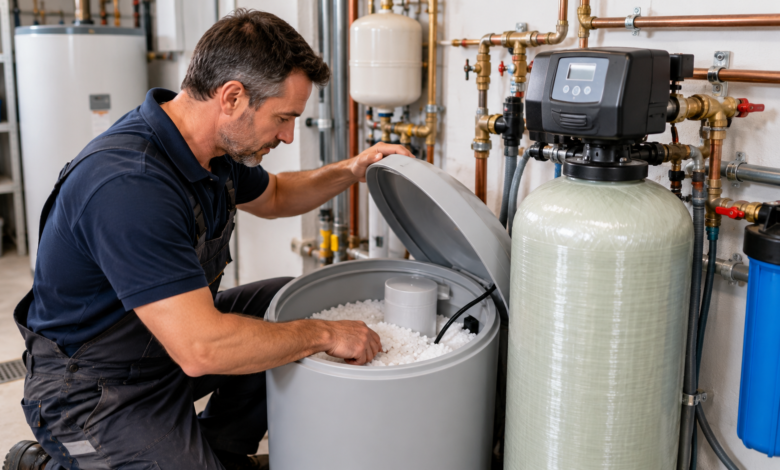
A nearly empty salt tank can prevent normal regeneration. A compacted salt layer, often called a salt bridge, can also make the tank look full when the lower section has little usable brine. This is one of the simpler soft water system repair checks.
Handle a salt bridge carefully. Avoid sharp tools or excessive force because damaging the brine tank can create a larger problem.
Check the Bypass Valve
If the system is in bypass, incoming water can travel around the softener and remain hard. Confirm the valve position using the manufacturer’s instructions.
This simple soft water system repair check is especially useful after plumbing work, servicing, or accidental movement of the bypass handle.
Check Regeneration
The control head may have lost its programmed settings after a power interruption, or the scheduled regeneration may not have occurred. Check the clock, hardness setting, and regeneration schedule against the installation manual.
If a manual regeneration is available, follow the manufacturer’s procedure rather than improvising a cycle. This simple soft water system repair step can distinguish a settings problem from a deeper fault.
If the system repeatedly fails to regenerate, the fault may involve the control valve, motor, electrical supply, or internal components.
For more insights, read our previous article: Dryer duct repair
Other Common Soft Water System Repair Problems
The Brine Tank Will Not Draw Water Correctly
A softener needs to draw brine during regeneration. A blocked injector, restricted brine line, damaged float assembly, or drain problem can interfere with that process.
You can check for obvious kinks, closed valves, or visible blockages that the manual tells you to inspect. In that case, a trained professional should handle soft water system repairs.
Do not dismantle internal components unless the manufacturer provides a safe procedure for your specific model.
Water Is Leaking Around the Softener
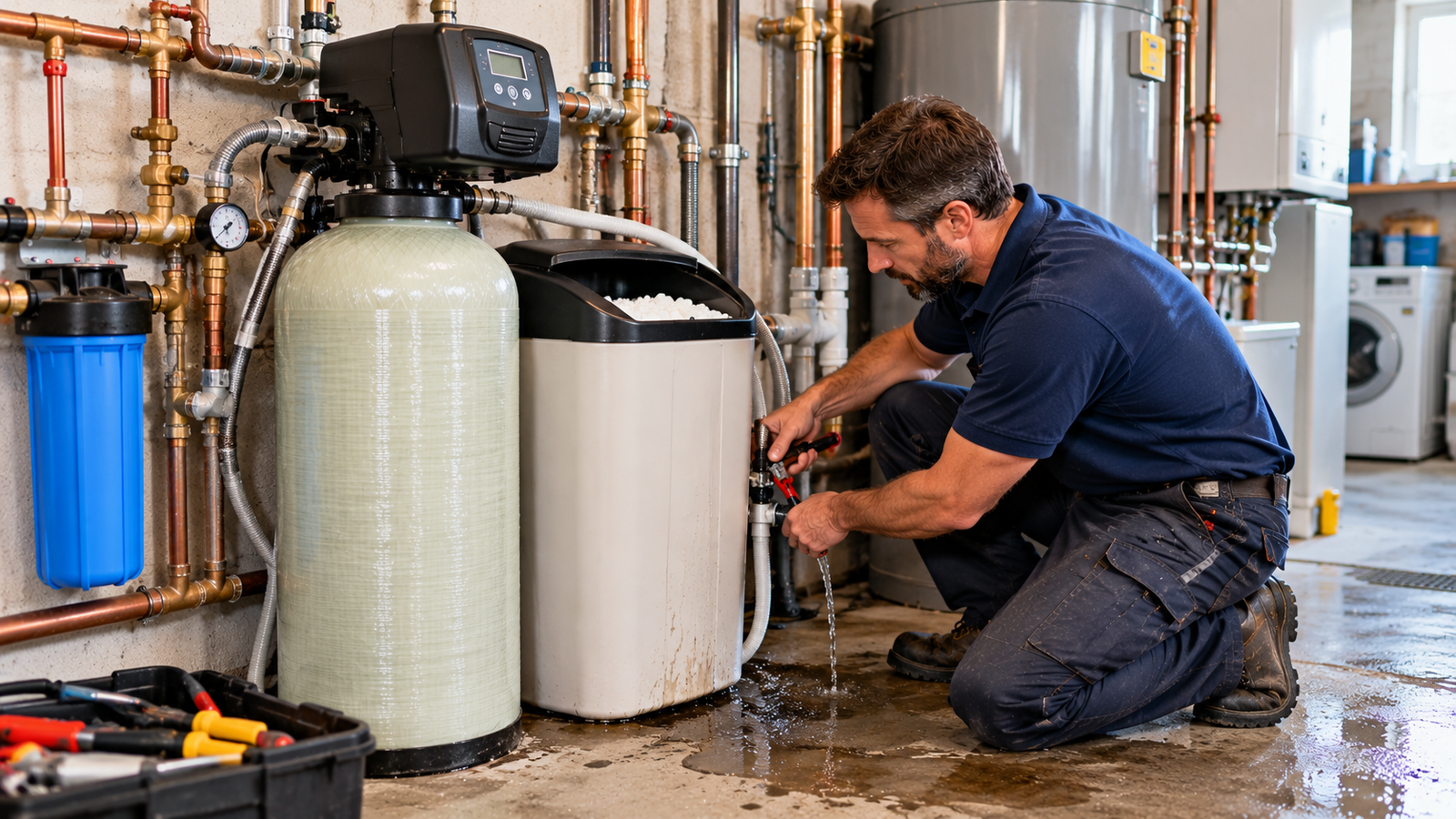
First, identify where the water is coming from. A loose connection, damaged hose, tank fitting, or valve seal can require very different repairs.
A qualified plumber or water-treatment technician should handle significant leaks or internal faults. This is an important limit of DIY soft water system repair.
If a leak is close to electrical controls, avoid opening the control cabinet while the equipment is energized.
The System Makes Unusual Noises
Some sounds are normal during regeneration. New grinding, repeated clicking, loud vibration, or persistent banging can indicate a mechanical or flow problem.
Note when the noise occurs and whether it coincides with regeneration or water use; this can speed diagnosis.
When Should You Call a Professional?
Hand off soft water system repair to a qualified professional when the problem involves internal plumbing, persistent leaks, electrical components, damaged pressure-bearing parts, contaminated or unusual-looking water, or a fault you can’t safely identify from the manufacturer’s instructions.
Professional servicing is also sensible when a system has been unused for a long period or has developed a hygiene concern. If basic soft water system repair does not restore reliable operation, a service visit is preferable to repeated resets.
The Drinking Water Inspectorate advises that maintenance should be proactive, follow the manufacturer’s instructions at minimum, and be carried out by people who are competent and familiar with the equipment.
If you rent, check the tenancy agreement before arranging work on fixed plumbing; the landlord or property manager may be responsible.
How to Prevent Future Softener Problems
Good maintenance can reduce the need for emergency soft water system repair. It can also make future soft water system repair easier because faults are spotted earlier.
Inspect the brine tank for unusual build-up, watch for leaks or changes in water hardness, and follow the manufacturer’s instructions for filters and replaceable components. Keep a service record if the equipment is part of a rental property or managed building.
The Drinking Water Inspectorate recommends regular preventive maintenance for treatment systems and says manufacturer maintenance instructions are the minimum requirement.
For extended periods of non-use, check the manufacturer’s instructions because some systems need specific maintenance before or after being left unattended.
Drinking Water and a Repaired Softener
Repairing a softener is not only about restoring soft water. Safe soft water system repair must also preserve the intended drinking-water arrangement.
Domestic ion-exchange softeners replace calcium and magnesium with sodium, so treated water can contain more sodium than the incoming supply. The UK Drinking Water Inspectorate advises keeping an unsoftened drinking-water supply at the kitchen tap and warns that artificially softened water should not be used to prepare baby feeds.
This matters when a repair changes pipework, bypass arrangements or the outlet supplying the kitchen. Do not assume that every softened outlet is suitable for drinking simply because the water looks clear.
European plumbing requirements differ by country. Check local requirements and use products suitable for contact with drinking water where applicable. EU guidance recognizes that materials in contact with drinking water can affect water quality if systems are poorly designed, maintained, or controlled.
Can You Repair a Water Softener Yourself?
Some basic soft water system repair checks are suitable for homeowners. In many cases, these checks are enough to decide whether further soft water system repair is needed:
- Check the salt level and look for a salt bridge.
- Confirm that the bypass is in the correct position.
- Check for obvious hose kinks or visible blockages.
- Verify the programmed time and regeneration settings.
- Follow the manufacturer’s instructions for a regeneration cycle.
Do not improvise electrical repairs, modify safety devices, cut into pressurized plumbing, or dismantle internal valve components without appropriate competence. Incorrectly disturbed fittings can turn a minor repair into water damage.
If the same fault returns, do not keep resetting the machine. A technician can test the valve, brine system, and resin performance more thoroughly.
Frequently Asked Questions
How Do I Know If My Water Softener Needs Repair?
Signs include hard water returning, poor regeneration, abnormal salt consumption, water remaining in the brine tank, leaks, error codes, unusual noises, or a bypass that will not operate correctly. Start with the manufacturer’s troubleshooting guide before replacing parts.
Why Is My Water Still Hard After Regeneration?
Possible causes include insufficient salt, a salt bridge, incorrect hardness settings, an open bypass, poor brine draw, a blocked component, or exhausted resin. Start soft water system repair with simple checks before assuming a major internal failure.
Can I Break Up a Salt Bridge Myself?
You can sometimes identify and address a salt bridge as routine maintenance, but avoid sharp tools and excessive force. If the salt tank is damaged, contaminated, or difficult to inspect safely, stop and follow the manufacturer’s service instructions.
How Often Should a Water Softener Be Serviced?
No single service interval applies to every model. Follow the manufacturer’s maintenance schedule and inspect the system regularly for leaks, salt problems, and performance changes. Water-treatment guidance favors preventive maintenance rather than waiting for failure.
Is Softened Water Safe to Drink?
It depends on the system, installation and local requirements. Ion-exchange softeners can increase sodium in treated water, which is why UK guidance recommends an unsoftened kitchen drinking-water supply. Do not use softened water to prepare baby feeds.
When Should I Stop DIY Soft Water System Repair?
Stop when the job involves electrical faults, significant leaks, internal valves, pressurized plumbing, damaged tanks, or uncertain water quality. Use a qualified professional familiar with the system, especially when the softener is connected to drinking-water plumbing.


One Comment