Emerald Green Arborvitae: How to Grow, Plant and Care for This Evergreen Tree
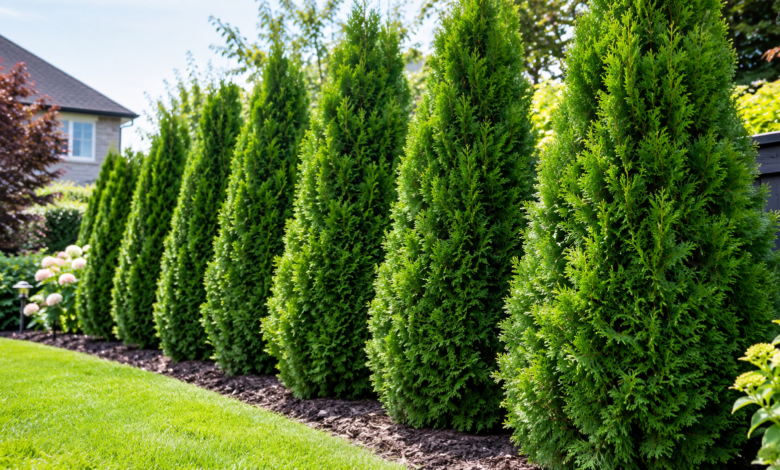
Emerald green arborvitae is a compact, upright evergreen conifer valued for its rich green foliage, naturally conical shape and suitability for privacy screens. Botanically identified as Thuja occidentalis ‘Smaragd’, it is also known as Emerald Green Thuja or white cedar ‘Smaragd’. Its dense foliage remains green throughout the year, making it useful for residential gardens, boundaries and structured landscaping.
Although this plant is relatively low-maintenance, it needs the right growing conditions to develop healthy roots and retain its attractive colour. Poor drainage, prolonged drought, excessive shade and unsuitable pruning can cause problems. Choosing the correct planting position is particularly important because these trees can become considerably taller and wider than young nursery specimens suggest.
This guide explains how to plant, space, water and maintain emerald green arborvitae, with practical advice for UK and other European gardens.
What Is Emerald Green Arborvitae?
Emerald green arborvitae is an evergreen conifer belonging to the cypress family, Cupressaceae. The cultivar ‘Smaragd’ is recognised for its narrow, pyramidal growth habit and bright green, scale-like foliage. Unlike broad-leaved evergreen shrubs, it has fine, overlapping sprays of foliage that create a dense, architectural appearance.
The Royal Horticultural Society (RHS) lists Thuja occidentalis ‘Smaragd’ as a slow-growing conifer suitable for screening, shelter and use as a specimen plant.
Its main characteristics include:
-
Foliage: Dense green foliage that provides year-round coverage.
-
Shape: Naturally upright and conical, often requiring little shaping.
-
Growth: Relatively slow compared with many larger hedge conifers.
-
Uses: Privacy screens, boundary planting, formal gardens and standalone features.
-
Hardiness: Generally well suited to cold European climates when grown in appropriate conditions.
Emerald green arborvitae is particularly useful where a garden needs a neat evergreen screen without the spreading form of a large, broad-canopied tree.
How Big Does Emerald Green Arborvitae Get?
Mature size depends on the growing environment, plant age and the specific nursery stock being sold. The RHS lists a potential height and spread of approximately 1.5–2.5 metres for ‘Smaragd’, with maturity potentially taking 10–20 years. Other horticultural references and plants sold under similar common names may give larger estimates.
For this reason, check the botanical name and mature dimensions on the plant label rather than relying solely on the common name.
When planning a hedge, consider its eventual height, width and distance from paths, walls, fences and neighbouring boundaries. A plant that looks small in a pot can eventually occupy substantial space.
Is It Suitable for Small Gardens?
Yes, emerald green arborvitae can suit smaller gardens because of its upright growth habit. However, it is not automatically a dwarf plant, and several specimens planted close together can eventually form a substantial hedge.
For a compact garden, consider planting fewer trees with enough room to develop naturally. Container growing is another option, although pots restrict root space and require closer attention to watering.
Where Should You Plant Emerald Green Arborvitae?
The best location receives plenty of sunlight and has moist but well-drained soil. Full sun generally encourages dense growth, while some light shade may be tolerated. Deep shade can lead to weaker growth and a less attractive shape.
The RHS identifies chalk, clay, loam and sandy soils as suitable, provided moisture conditions are appropriate. It also recommends protecting young plants from drying winds.
Before planting, assess the following conditions.
Sunlight: Choose an open position with several hours of direct sunlight. Avoid heavily shaded corners where possible.
Drainage: Water should drain away rather than remain around the roots. Persistently waterlogged soil increases the risk of root problems.
Wind exposure: Young trees can be vulnerable to drying winds, particularly before their root systems become established.
Available space: Allow for the mature width of each tree instead of planning around its current nursery size.
In European gardens, local climate matters. Cool, temperate UK conditions differ from hot Mediterranean summers and continental winters. In warmer or drier locations, reliable irrigation during establishment becomes particularly important.
How to Plant Emerald Green Arborvitae
Planting correctly gives the roots a better chance of establishing before periods of heat, cold or drought.
Step 1: Choose the Right Planting Time
Autumn and spring are often practical planting periods in temperate European climates because conditions are generally less stressful than during hot, dry weather. Planting can also be possible at other times when the ground is workable and adequate watering is available.
Avoid planting into frozen soil, waterlogged ground or during extreme heat.
Step 2: Prepare the Ground
Remove weeds and loosen the soil across the planting area. Dig a hole approximately as wide as needed to accommodate the root ball comfortably, while keeping the final planting depth appropriate for the roots.
If the soil is heavy clay, assess its drainage before planting. Simply adding compost to the planting hole will not solve a site-wide drainage problem.
Step 3: Position the Root Ball
Place the plant upright and check that the top of the root ball sits level with the surrounding soil. Avoid burying the trunk base or planting too deeply.
Gently loosen tightly circling roots where appropriate, taking care not to damage the root system unnecessarily.
Step 4: Backfill and Water
Refill the hole with the excavated soil and firm it gently to remove large air pockets. Water thoroughly so moisture reaches the root ball and the surrounding soil.
Apply an organic mulch layer if useful, keeping it clear of the trunk.
Step 5: Check the Plant Regularly
During the first growing season, check soil moisture frequently. Water when the root zone begins to dry rather than following a rigid daily schedule.
Newly planted emerald green arborvitae needs consistent moisture while establishing, but the roots should never sit in permanently saturated soil.
How Far Apart Should You Plant Emerald Green Arborvitae?
Spacing depends on whether you want a closely connected hedge, a looser screen or individual ornamental trees.
For a formal privacy hedge, plants are commonly spaced around 60–90 cm apart, but this is a planning starting point rather than a universal rule. Wider spacing allows more room for individual plants to develop, while closer spacing may produce a more continuous screen sooner.
Use the mature width stated by your nursery to make the final decision. The RHS gives a potential spread of 1.5–2.5 metres for ‘Smaragd’, although actual dimensions vary with growing conditions and plant stock.
Avoid crowding the trees so tightly that their lower foliage becomes shaded or they compete excessively for water and nutrients.
For individual specimen planting, leave enough room to appreciate each tree’s natural shape. For a hedge beside a boundary, also check local rules concerning property lines and mature hedge height.
Watering, Feeding and Pruning
Watering Requirements
Emerald green arborvitae prefers soil that remains reasonably moist without becoming waterlogged. Newly planted specimens usually need more frequent monitoring than established trees.
During dry spells, water deeply enough to reach the root zone. Sandy soil may dry more quickly than heavier soil, while containers often need watering more frequently than plants growing in the ground.
Do not assume that brown foliage always indicates drought. Excess water, root damage and disease can also cause deterioration.
Feeding and Mulching
Plants growing in reasonably fertile soil may not need regular fertiliser. If growth is weak, first check sunlight, drainage, root health and moisture before applying a feed.
A light layer of composted organic mulch can help moderate soil temperature and reduce moisture loss. Keep mulch away from direct contact with the trunk, and avoid excessive applications that could keep the root collar too wet.
Pruning and Shaping
One advantage of emerald green arborvitae is its naturally attractive form. The RHS indicates that routine pruning is generally unnecessary for this cultivar.
Remove dead or damaged material when necessary, using clean, suitable tools. If light shaping is required, avoid cutting deeply into old, bare wood because many conifers do not reliably regenerate from leafless sections.
If you want to control hedge height, plan for its eventual size before planting rather than relying on severe pruning later.
Wear gardening gloves when handling the foliage. The RHS notes that the plant can be harmful if eaten and may cause skin irritation.
Why Is Emerald Green Arborvitae Turning Brown?
Brown foliage is a common concern, but the colour change does not always mean that the entire tree is dying.
Possible causes include:
-
Water stress: Prolonged drought can dry the roots and damage foliage.
-
Poor drainage: Excess moisture can contribute to root damage and root rot.
-
Insufficient light: Heavy shade may weaken growth and cause foliage loss.
-
Pests: Scale insects and conifer aphids can affect plant health.
-
Disease: Fungal diseases and cankers may cause localised browning or branch dieback.
These problems are among the potential pests and diseases identified in the RHS plant profile.
Start by checking the soil moisture, drainage and distribution of the damage. If only one branch is affected, inspect it for injury, discolouration or signs of pests. If browning spreads rapidly or several branches die, seek advice from a qualified gardener or plant-health specialist.
Avoid applying pesticides or fungicides without identifying the likely cause. Treating the wrong problem may waste money and harm beneficial garden organisms.
(FAQs)
Is emerald green arborvitae evergreen all year?
Yes. Emerald green arborvitae is an evergreen conifer that normally retains its green foliage throughout the year. Its colour and density can still be affected by drought, disease, root damage and unsuitable growing conditions.
How fast does emerald green arborvitae grow?
Growth is generally slow to moderate, depending on the climate, soil, water supply and age of the plant. The RHS describes ‘Smaragd’ as slow-growing and estimates 10–20 years to reach its listed mature dimensions.
Can emerald green arborvitae grow in pots?
Yes. Choose a sufficiently large, stable container with drainage holes and use a suitable free-draining growing medium. Container-grown plants need closer monitoring because their limited root space makes them more vulnerable to drying out and temperature fluctuations.
Does emerald green arborvitae need full sun?
Full sun is generally preferred for healthy, dense growth. Some light shade may be tolerated, but heavily shaded locations are less suitable. Good sunlight, appropriate moisture and adequate space help maintain an attractive form.
Why is my emerald green arborvitae turning brown in winter?
Winter browning can result from cold, drying winds, moisture stress or other environmental damage. However, root problems, pests and fungal diseases can produce similar symptoms. Inspect the plant and growing conditions before deciding on a treatment.
How do you keep emerald green arborvitae healthy?
Plant it in a suitable sunny position with well-drained soil, water consistently while it establishes, monitor moisture during dry periods and avoid excessive pruning. Regular inspections help identify browning, pest activity and drainage problems before they become more serious.