
Home Cleaning & Care
How to Remove Wallpaper Glue Without Damaging Your Walls
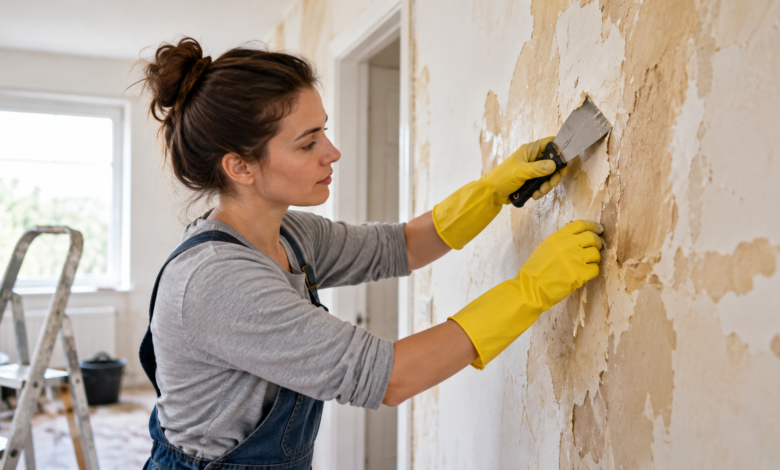
Removing wallpaper often leaves a sticky or shiny layer of paste behind. To remove wallpaper glue without damaging plaster or paint, start with warm water, a well-wrung sponge, and gentle scraping. Work in small sections, soften the residue rather than attacking it dry, then rinse the wall and let it dry completely.
The right method depends on the surface. Painted plaster can usually tolerate careful cleaning, while plasterboard needs more controlled moisture because its paper facing can be damaged. Older walls may contain several layers of paint, lining paper or previous adhesive. This guide explains how to remove wallpaper glue, deal with stubborn residue and prepare the wall for decorating.
How to remove wallpaper glue: the quick answer
For ordinary wallpaper paste, dampen a small section with warm water, allow the adhesive to soften, then wipe or gently scrape it away with a flat scraper. Repeat until the surface feels clean rather than tacky. Rinse with clean water and let the wall dry fully before sanding, priming, or painting.
If water does not soften the residue, use a purpose-made wallpaper-removal solution according to its label. B&Q explains that chemical wallpaper strippers dissolve adhesive, while steam can soften old adhesive beneath wallpaper.
What you need
The basic principle is simple: safe wallpaper removal starts with softening, not force.
The aim is controlled moisture, not soaking. Keep the scraper fairly flat so its edge lifts softened paste instead of cutting into plaster or paint. If you are working high on a wall, use a stable step ladder.
Step-by-step: how to remove wallpaper glue
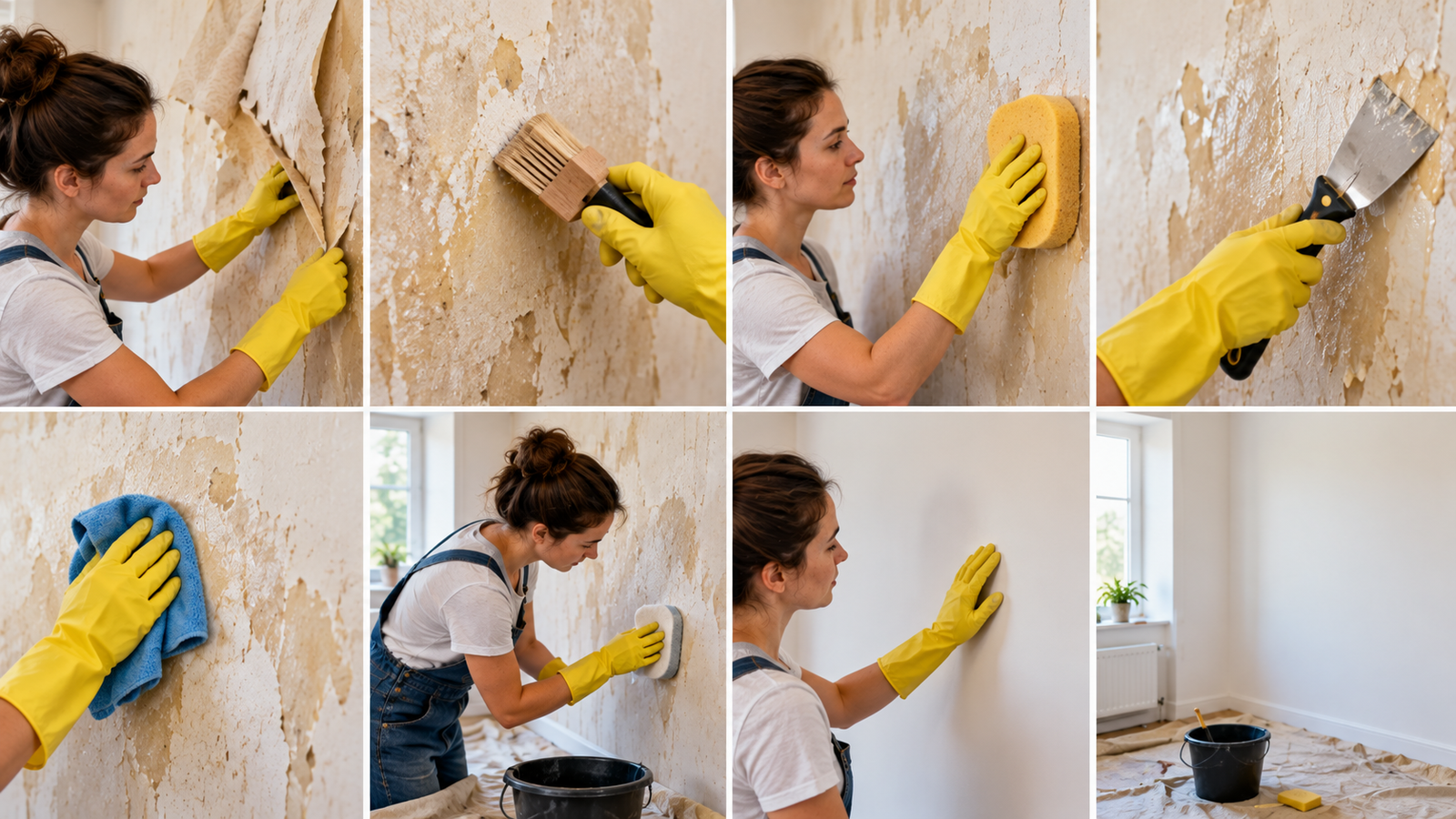
Step 1: Clear away dry residue
Start with the wall dry. Brush away loose paper fibers, flakes, and dried paste. If old wallpaper is still attached, remove the paper first.
Step 2: Test a small area
Before applying water across the whole surface, test a less noticeable area. If you are unsure how to remove wallpaper glue from a delicate finish, test first. This is especially useful on old painted walls, delicate finishes and plasterboard.
When learning how to remove wallpaper glue, remember that the goal is to soften the adhesive, not saturate the substrate. If paint starts lifting, plaster becomes soft, or plasterboard paper begins to tear, stop.
Step 3: Soften the adhesive
Wring a sponge or cloth well, then apply warm water to a manageable section. Leave it briefly so moisture can penetrate the paste. Reapply lightly if necessary.
Step 4: Scrape gently
Once softened, hold the scraper at a shallow angle and use light pressure. Short strokes are safer than forcing the blade through resistant patches.
A useful rule for removing wallpaper glue is simple: if the scraper stops moving easily, stop scraping and soften the area again. Do not dig the corner of the tool into the wall.
Step 5: Rinse and dry
After removing visible paste, wipe the wall with a clean, damp sponge. Change the water when it becomes cloudy or slippery to avoid spreading adhesive back over the surface.
A wall can look clean while still carrying a thin adhesive film. B&Q says walls should be clean and dry before applying new wallpaper.
How to remove wallpaper glue from plasterboard
Plasterboard needs more care because its paper surface can be damaged by excess water or aggressive scraping. Use a well-wrung sponge and work on small areas rather than soaking the board.
When deciding how to remove wallpaper glue from plasterboard, use the least aggressive method that works. If the paper face starts tearing, stop. Continuing to scrape can turn adhesive removal into a larger wall repair.
How to remove wallpaper glue from plaster and painted walls
Sound plaster generally tolerates careful damp cleaning, but old or damaged plaster still needs caution. Test first and avoid prolonged saturation.
Paint adds another variable. For a painted wall, removing wallpaper glue depends on controlling moisture. Older or poorly bonded paint can soften or lift when repeatedly wetted. If paint comes away on the sponge, reduce moisture and pressure.
For more insights, read our previous article: how often to rotate tires
How to remove stubborn wallpaper glue
The same approach for removing wallpaper glue works for most ordinary paste residues.
Some adhesives resist water after drying into a hard film. If warm water is not enough, use a wallpaper-removal product designed for adhesive residue. Follow its label for dilution, contact time, ventilation, and protective equipment.
A current B&Q-listed Zep wallpaper remover is intended to dissolve wallpaper adhesives and gives specific dilution and application instructions.
Apply such products only where needed. Once the adhesive softens, lift it gently and rinse as directed. Never mix wallpaper remover with bleach, ammonia, acids, or other household cleaners because unknown combinations can create hazardous reactions or fumes.
If residue remains hard, do not simply increase scraping pressure. Giving the water or product more time to work is usually safer.
How to remove wallpaper glue when it has dried hard
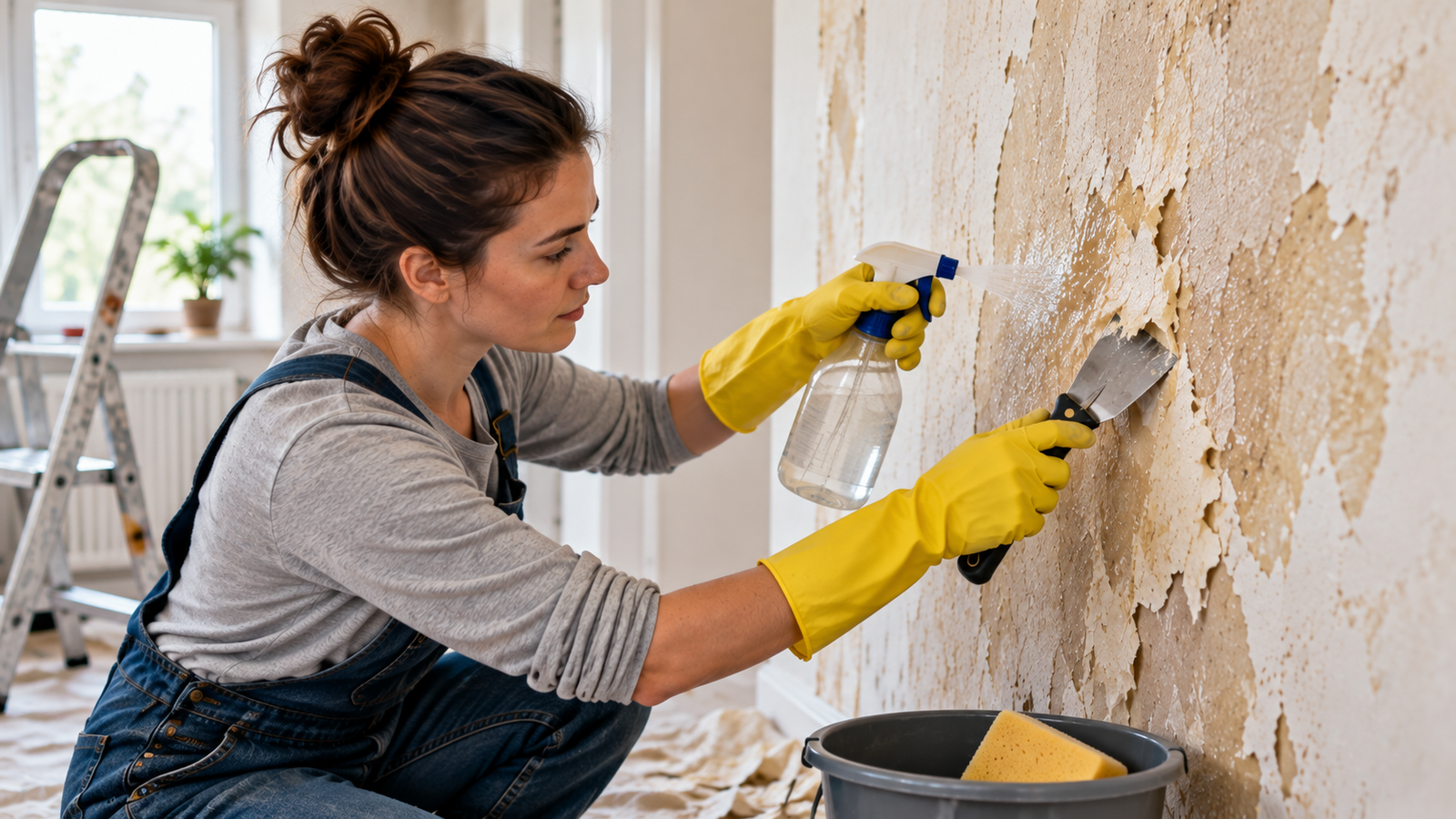
Dried paste can often be re-softened. Wet a small section, wait, then test whether the surface has become easier to lift. Repeat rather than using an abrasive tool immediately.
When working out how to remove wallpaper glue on an older property, unexpected layers are a reason to slow down. If the wall starts crumbling, large paint flakes detach, or the substrate is exposed, stop and assess the damage.
Preparing the wall for painting or new wallpaper
Before decorating, check the wall again after learning how to remove wallpaper glue properly. After removing the adhesive, the wall should be clean, dry, stable, and reasonably smooth. Run a clean hand over the surface; it should not feel sticky, waxy or coated.
Once the wall is dry, you can fill small dents, then sand carefully and dust clean. Porous or repaired surfaces may need a suitable primer or sealer. For new wallpaper, the surface should be clean, dry, sound and smooth; B&Q also recommends sealing absorbent walls when appropriate.
Common mistakes to avoid
A gentle approach to removing wallpaper glue usually protects the surface better than aggressive scraping.
Another common mistake is scraping dry paste. Hard residue can resist the blade and tempt you to use excessive force. Softening it first is usually more effective.
Don’t skip the final rinse, and don’t rush drying. Painting or wallpapering over a damp or contaminated surface can compromise the finish.
When to stop DIY work
Most ordinary wallpaper paste is a manageable decorating task. Knowing how to remove wallpaper glue is useful, but knowing when to stop is equally important. Seek professional advice if you find extensive water damage, loose or crumbling plaster, significant mould, badly damaged plasterboard or an unknown material that may be hazardous.
Older buildings require extra caution. HSE says asbestos can still be present in buildings built or refurbished before 2000, including textured decorative coatings and other building materials. If you suspect asbestos, do not sand, scrape, drill or otherwise disturb the material without appropriate assessment and controls.
If electrical fittings become wet, leave the relevant circuit isolated and seek qualified electrical advice rather than testing the installation yourself.
Frequently Asked Questions
What is the easiest way to remove wallpaper glue?
The easiest method for ordinary paste is to soften it with warm water, wipe away the residue, and gently scrape stubborn patches. If water is ineffective, a suitable wallpaper-removal product can make the job easier.
Can I use vinegar to remove wallpaper glue?
Vinegar is not necessary for most wallpaper paste. Warm water is a sensible first choice, followed by a purpose-made wallpaper remover if the adhesive remains stubborn. Avoid mixing household chemicals.
How can I remove wallpaper glue without damaging paint?
Use a well-wrung sponge, work in small areas, and avoid aggressive scraping. Test first, and allow the adhesive to soften before lifting it. If paint starts coming away, stop and reassess the cleaning method.
How do I remove wallpaper glue from plaster walls?
Dampen the residue gradually, allow it to soften, and lift it with a scraper held at a shallow angle. Rinse with clean water and let the wall dry fully. Avoid prolonged soaking on old or damaged plaster.
How long should I wait before painting after removing wallpaper glue?
There is no single drying time for every wall. It depends on the surface, moisture used, ventilation, and room conditions. Paint only when the wall is completely dry, clean, stable, and free from adhesive residue.
Can I paint over leftover wallpaper glue?
It is best to remove wallpaper glue before painting. Residual adhesive can interfere with the finish and may contribute to uneven appearance or adhesion problems. Clean, rinse, and dry the surface first, then repair and prime as needed.


5 Comments