Home Maintenance
Gas Furnace Repair: What to Check, When to Call a Professional and How to Stay Safe
You usually need gas furnace repair when a fuel-burning heating system stops producing heat, cycles unexpectedly, makes unusual noises, or shows signs of a fault. Because gas appliances involve combustion and carbon monoxide risk, homeowners should limit checks to safe, user-level observations and leave internal gas, combustion, flue, and electrical work to qualified professionals.
For European readers, terminology matters. In the UK and Ireland, central-heating systems are commonly described in terms of boilers and radiators, while “gas furnace” is more familiar in North American usage. The underlying safety principle is the same: don’t dismantle or adjust a malfunctioning fuel-burning appliance without the right training. This guide explains common symptoms, safe checks, professional repair, costs, maintenance, and when to take the appliance out of service.
What Does Gas Furnace Repair Involve?
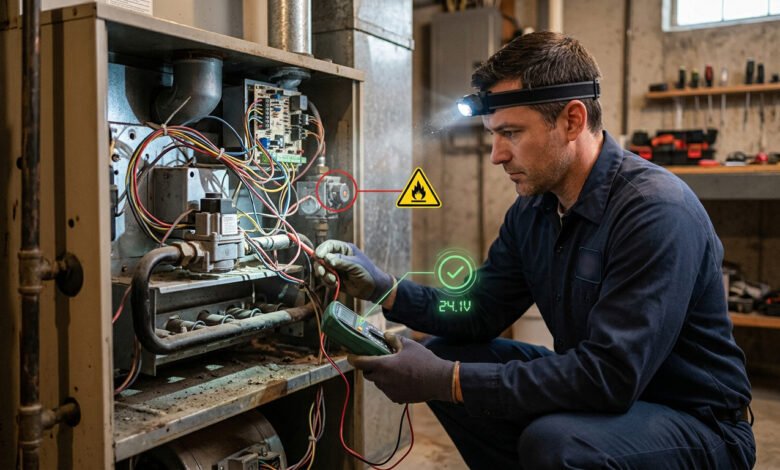
Gas furnace repair means diagnosing and correcting a fault in a gas-fired forced-air heating appliance. Depending on the system, a technician may investigate ignition, airflow, thermostat controls, burners, safety controls, the heat exchanger, combustion, and the flue or venting system.
A useful first step is to identify the symptom rather than opening the appliance. A furnace that will not start can have a different cause from one that starts and shuts down repeatedly. Likewise, a strange smell, soot, damaged vent, or carbon monoxide alarm requires a safety response rather than routine troubleshooting.
Common Signs You May Need Gas Furnace Repair
Several symptoms deserve attention:
- The heating system does not start when the thermostat calls for heat.
- The blower runs, but the home stays cold.
- The appliance repeatedly starts and stops.
- Airflow from the vents is weak.
- You hear unfamiliar banging, rattling, humming, or scraping.
- A fault code appears on the control panel.
- Visible soot, corrosion, or damage appears around the appliance or flue.
- A carbon monoxide alarm sounds.
The last two signs are especially important. Carbon monoxide is colorless and odorless, and fuel-burning heating equipment can produce dangerous levels when it is defective, poorly maintained, or has blocked or damaged venting.
For more insights, read our previous article: Family Handyman magazine.
Safe Checks Before Calling a Technician
Some basic observations are reasonable, provided the appliance manual allows them and there is no gas smell, carbon monoxide alarm, or other immediate danger.
Check the Thermostat
Confirm that the thermostat is set to heating, the target temperature is above the current room temperature, and the display has power. If it uses batteries, replacing depleted batteries may restore normal operation.
Check the Power Supply
A furnace may depend on electrical power even though gas provides the heat. If the system has a dedicated electrical switch or circuit, check whether it was accidentally switched off or tripped. Do not remove electrical covers or attempt electrical repairs yourself.
Check the User-Accessible Filter
A severely dirty filter can restrict airflow and contribute to overheating or repeated shutdowns on some systems. Follow the manufacturer’s instructions to inspect and replace the filter. Do not remove sealed combustion components or internal panels simply to investigate a fault.
These checks can help you describe the problem, but they are not a substitute for professional gas furnace repair by a suitably qualified technician.
Why Gas Furnaces Stop Working
Causes can range from a simple control issue to a serious combustion or venting fault. Common possibilities include a thermostat problem, restricted airflow, ignition failure, a faulty sensor, blower problems, blocked or damaged venting, or aging components.
A technician should test the system rather than guess from the symptom alone. The same “no heat” complaint can result from different faults, so replacing parts without diagnosis can waste money and may introduce a safety problem.
Venting deserves particular attention. Official safety guidance notes that blocked, leaking, or damaged flues and chimneys can release combustion gases, including carbon monoxide, into living areas.
What Should Professional Gas Furnace Repair Cover?
The exact inspection depends on the appliance, manufacturer, and fault. Professional gas furnace repair may include checking the thermostat and controls, ignition sequence, burners, airflow, safety switches, combustion, heat exchanger condition, and flue or venting.
A proper service should follow the manufacturer’s instructions and applicable local requirements. Professional inspection is particularly important for older appliances, recurring faults, corrosion, unusual combustion behavior, or suspected venting problems.
Do not attempt to adjust gas pressure, modify burners, repair a heat exchanger, alter flue components, or bypass safety controls as a DIY project. These tasks can affect combustion and carbon monoxide safety. CPSC guidance specifically warns against servicing fuel-burning appliances without the appropriate knowledge, skill, and tools.
When to Stop Using the Appliance Immediately
Some situations should not be treated as ordinary gas furnace repair troubleshooting.
If you smell gas, follow your local gas emergency guidance and avoid creating ignition sources. If a carbon monoxide alarm sounds, move outside to fresh air and follow local emergency instructions. Do not re-enter or restart a suspected faulty appliance until it has been assessed appropriately.
Symptoms such as headache, dizziness, nausea, fatigue, confusion or shortness of breath can occur with carbon monoxide exposure. Because CO cannot be detected by smell, an absence of odor does not prove that the appliance is safe.
Carbon monoxide alarms provide an important layer of protection but do not replace correct installation, maintenance, and professional inspection. Current CPSC guidance recommends CO alarms on every level and outside sleeping areas, with regular testing.
How Much Does Gas Furnace Repair Cost?
There is no reliable single European price for gas furnace repair. Labor rates, travel charges, replacement parts, appliance type, accessibility, and local regulations can differ substantially between countries and cities.
A straightforward service call may cost far less than replacing a major component, while an older appliance with multiple faults may be uneconomical to repair. Ask for a written diagnosis and quotation where practical. It can also help to compare the repair cost with the appliance’s age, condition, efficiency, parts, availability, and expected remaining service life.
For UK readers, remember that a “furnace” search may return services aimed at North American forced-air systems. If the home has a gas boiler feeding radiators, search for a qualified boiler or heating engineer using the terminology used locally. This distinction can make finding appropriate gas furnace repair or boiler repair services much easier.
Repair or Replace?
Gas furnace repair is often sensible when the fault is limited, the appliance is otherwise sound, replacement parts are available, and the system remains suitable for the property.
Replacement deserves consideration when the appliance repeatedly fails, is badly corroded, parts are hard to source, it is unsafe, or it is approaching the end of its practical service life. The decision should consider the whole heating system, not just the repair bill.
For apartments and flats, owners and tenants should also check whether the appliance, flue or shared heating infrastructure is their responsibility. Landlord, building management or local requirements may apply.
How to Prevent Future Heating Faults
Good maintenance reduces avoidable problems and helps identify safety issues early. Follow the manufacturer’s servicing schedule and keep accessible filters, vents and surrounding areas maintained as instructed.
Before colder weather, check that external vents are not blocked by debris or other materials where safely visible. Never block ventilation openings or modify flues. Arrange professional servicing at the interval recommended for the appliance and local rules.
Seasonal needs vary in European homes. A draughty older house in a colder northern climate has different heating demands from a well-insulated apartment in southern Europe. Maintenance should therefore be based on the actual appliance, property and local requirements rather than a universal checklist.
Frequently Asked Questions
Is Gas Furnace Repair Safe to Do Yourself?
Only basic user checks, such as thermostat settings or an accessible filter where the manual permits it, should normally be considered. An appropriately qualified professional should handle gas, combustion, flue, burner, and internal electrical work.
Why Does My Gas Furnace Turn On and Off Repeatedly?
Repeated cycling can have several causes, including airflow restriction, control problems, overheating, or component faults. Because the symptom has multiple possible causes, professional diagnosis is preferable to replacing parts at random.
Can a Dirty Filter Cause a Heating System to Stop?
A severely restricted filter can reduce airflow and contribute to overheating or protective shutdowns on some systems. Check and replace the filter according to the manufacturer’s instructions, but investigate recurring shutdowns rather than treating the filter as the only possible cause.
How Often Should a Gas Heating System Be Serviced?
The right interval depends on the appliance, the manufacturer’s instructions, and local requirements. Professionals should inspect and maintain fuel-burning heating systems as appropriate, paying attention to the appliance, flue, and venting.
Should I Repair an Old Gas Furnace or Replace It?
Consider safety, repair history, parts availability, condition, efficiency, and expected remaining service life. A qualified heating professional can assess whether gas furnace repair is sensible or whether replacement is the safer long-term option.
What Should I Do If My Carbon Monoxide Alarm Sounds?
Leave the property for fresh air and follow local emergency guidance. Do not investigate the suspected source yourself or restart the fuel-burning appliance. Have appropriately trained personnel check the heating equipment and other possible sources before reuse.