
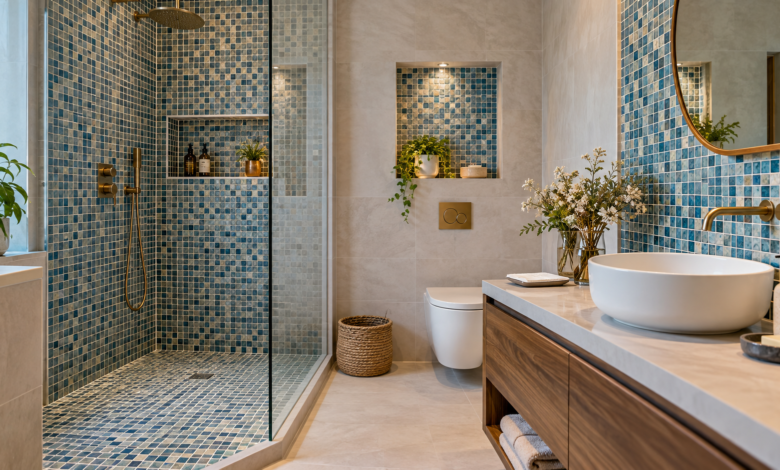
Mosaic Tiles Bathroom: How to Choose the Right Style and Material
A well-planned mosaic tile bathroom can add texture, color, and character without covering every surface in small pieces. Mosaics are especially useful on shower floors, niches, splash zones, and feature walls because their small format follows slopes and detailed areas more easily than large tiles. The right plan starts with practical requirements: the tile’s intended use, surface finish, slip performance, grout, adhesive and waterproofing system.
For European homes, bathrooms range from compact flats to large family houses and from older properties to modern wet rooms. This guide explains where mosaic tile bathroom designs work best, how porcelain, ceramic, Glass and stone compare, and what to check before installation.
Why choose mosaic tiles bathroom designs?
Mosaic tiles are small-format pieces supplied individually or on sheets. Their main advantage is flexibility: they can follow shower falls, frame niches, and create patterns around drains or other details.
A mosaic can also act as a controlled focal point. A small patterned area behind a basin or inside a shower niche may provide enough visual interest without making the whole room feel busy.
The main trade-off is grout. More pieces mean more joints, which can increase cleaning and maintenance compared with large-format tiles.
Where do mosaic tiles bathroom designs work best?
Mosaic tiles bathroom shower floors
Small porcelain mosaics are often useful on shower floors because the format makes it easier to create the required fall towards a drain. Multiple joints may also contribute to traction, but grout alone does not make a floor slip-resistant. Check the manufacturer’s wet-floor suitability and slip information for the exact product.
Matt or textured porcelain is a sensible starting point for many shower floors. Use glossy decorative Glass on a floor only when the manufacturer specifically rates it for that application.
Mosaic tiles bathroom shower walls
Porcelain, ceramic and suitable glass mosaics can work on shower walls when the tile, adhesive and substrate are compatible. Glass can reflect light and add depth. In contrast, porcelain generally gives a more solid, understated finish.
Tiles and grout are not a replacement for a waterproofing system behind a wet-area installation. The substrate, waterproofing, joints, and penetrations must suit the construction method and applicable local requirements.
Mosaic tiles bathroom niches and feature areas
A shower niche is a useful place for a decorative mosaic because a small area can provide contrast without overwhelming the room. The same idea works behind a vanity, around a bath, or as a feature band.
For a compact bathroom, one defined mosaic area is often easier to live with than several competing patterns.
Which material is best for mosaic tile bathroom projects?
There is no universal winner. Choose according to the location and the manufacturer’s rating.
| Material | Strengths | Considerations |
|---|---|---|
| Porcelain | Dense, durable and available in matt or textured finishes | Check floor rating and wet-slip suitability |
| Ceramic | Wide choice of colours and patterns | Many products are intended mainly for walls |
| Glass | Reflective, bright and easy to wipe on the face | Can show water marks; floor use is product-specific |
| Natural stone | Distinctive texture and natural variation | May need sealing and stone-safe cleaning |
| Mixed mosaic | Combines several visual effects | Every component must be compatible with cleaning and installation |
Porcelain is commonly used for floors and wet areas. However, the specific product still needs to be rated for the intended application. Glass is often used for walls, niches, and decorative sections. Natural stone needs more careful consideration of sealing, staining and cleaning chemistry. Manufacturer instructions should take priority over broad material rules.
How to choose mosaic tiles: bathroom color, shape and finish
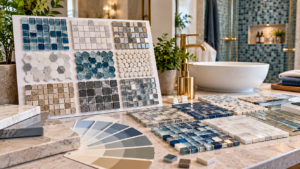
Consider the room’s light, sanitaryware, fittings and grout before choosing a pattern. Hexagons give a geometric look, small squares can feel traditional, and penny rounds create a softer appearance. Linear mosaics can introduce direction without a large graphic pattern.
Neutral textured porcelain is a quieter option when long-term flexibility matters.
View a physical sample where possible because screens can alter color and perceived scale.
Mosaic tiles bathroom grout matters more than most people expect
Because mosaics have many joints, grout occupies a noticeable part of the finished surface. Matching grout softens the pattern; contrasting grout makes each shape more visible.
Choose grout according to the tile, location, and manufacturer’s system. Cementitious, polymer-modified, and resin-based products have different properties. Glass mosaics need particular attention to adhesive and grout compatibility because translucent pieces can reveal the materials beneath them.
Grout does not make a shower waterproof on its own. Waterproofing comes from the properly prepared system behind the visible tile surface.
For more insights, you can read our previous article here: Home Insulation.
How to install mosaic tiles bathroom surfaces
Step 1: Prepare the surface
The substrate must be sound, appropriately prepared, and suitable for the tile system. In wet areas, confirm the required waterproofing is complete before tiling.
Step 2: Plan the layout
Dry-lay sheets first. Check corners, cuts, drains, niches, and sheet joints. Adjust the starting point if it prevents awkward narrow pieces in prominent locations.
Step 3: Use compatible adhesive
Select an adhesive suitable for the tile, substrate and wet-area application. Some glass or specialist mosaics require particular adhesive colors or formulations.
Step 4: Fix, grout and inspect
Press sheets evenly into the adhesive, maintain consistent joint spacing and follow curing times. Check corners, drains and penetrations. Where the system calls for movement joints or flexible sealant, do not substitute rigid grout.
An appropriately qualified professional can better assess complex wet rooms, unusual substrates, and major waterproofing work.
How to clean and maintain mosaic tiles bathroom surfaces
For mosaic tile bathroom surfaces, regular gentle cleaning is usually easier than aggressive cleaning after deposits build up. For porcelain and glazed ceramic, use a suitable mild or pH-neutral cleaner with a soft cloth, mop, or non-abrasive brush. Clean glass with a non-abrasive product and a soft cloth.
Natural stone needs a cleaner specifically suitable for that stone. Some acidic products can damage stone surfaces and cement-based grout. Always follow the manufacturer’s instructions.
Ventilation is part of bathroom maintenance. Allowing moisture to escape after showers can reduce lingering condensation and soap residue. If grout repeatedly becomes dark, crumbly, or damp, investigate the cause instead of simply using stronger chemicals.
Never mix household cleaning chemicals, particularly bleach with acids or ammonia. Follow label instructions and ventilate the room.
Are mosaic tiles bathroom designs suitable for small bathrooms?
Yes, when used selectively. Mosaics can handle shower falls, recesses, and detailed areas while a larger, quieter tile keeps the main walls visually calm.
One effective approach is to use a restrained mosaic on the shower floor or niche and a larger tile elsewhere. Large-format tiles can also make a small room feel calmer by reducing visible joints. The right balance depends on room proportions, lighting, cleaning preferences, and each surface’s technical requirements.
What should European homeowners consider when choosing mosaic tile bathroom designs?
No single specification fits every European property. Older homes may have uneven surfaces, while newer apartments may use engineered wet-room systems. Historic buildings can have conservation requirements.
Climate and ventilation also matter. If you rent, check your tenancy agreement before changing fixed finishes. For major renovation work, check the applicable national or local requirements for your country rather than relying on generic advice.
Frequently Asked Questions
What are the best mosaic tiles bathroom options for a bathroom floor?
A suitably floor-rated porcelain mosaic with an appropriate slip-resistant surface is often a practical choice. The exact product rating matters more than the word “porcelain”, so check technical information before buying.
Are glass mosaic tiles suitable for a bathroom?
Yes. Glass mosaics can work very well on bathroom walls, niches, and decorative areas. For floors, use only a product specifically designed and rated for that application because wet-slip performance varies.
Are mosaic tiles bathroom floors difficult to clean?
They may need more attention than large-format tiles because they have more grout joints. Regular gentle cleaning, good ventilation and prompt removal of soap or mineral deposits can keep maintenance manageable.
Do mosaic tiles make a small bathroom look bigger?
They can add depth and interest, but they do not automatically make a room look larger. A restrained pattern, consistent colors and good lighting usually create a calmer result than a highly busy mosaic.
What grout color should I use with bathroom mosaics?
Matching grout reduces visual contrast, while contrasting grout highlights individual shapes. Choose based on the look you want and the amount of maintenance you are comfortable with, then check a sample before installation.
Do mosaic tile bathroom installations make a bathroom waterproof?
No. Tiles and grout form the visible finish, not the complete waterproofing system. Wet areas need an appropriately designed and installed substrate and waterproofing system beneath the tiles.



One Comment