
Veneered MDF: Benefits, Uses, Costs & What to Know Before Buying
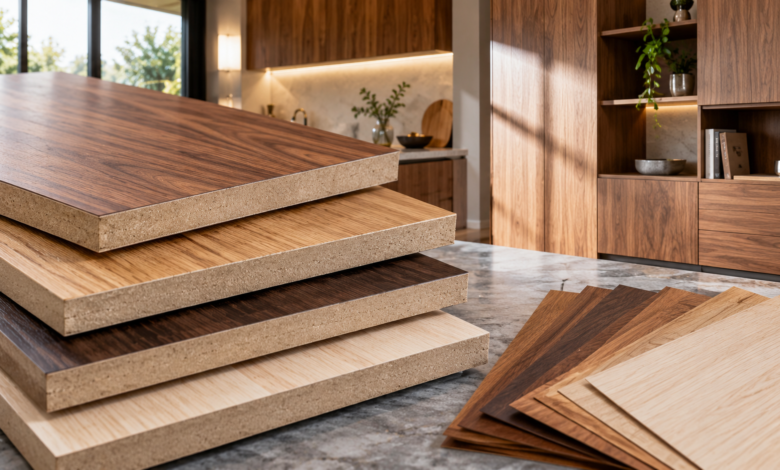
Veneered MDF is a manufactured wood panel with a thin layer of real wood veneer bonded to an MDF core. It is widely used for furniture, cabinetry, doors, shelving, and interior joinery because it combines MDF’s smooth, stable surface with the look of natural timber. For many homeowners, the attraction is straightforward: you can get a genuine wood surface without using a solid timber board throughout the entire panel.
The quality of the finished result depends on more than the veneer itself. Core quality, veneer species, thickness, adhesive, edge treatment, finishing, and moisture exposure all matter. This guide explains how veneered MDF works, where it performs well, its limitations, how to maintain it, and what to check before choosing it for a European home.
What Is Veneered MDF?
Veneered MDF consists of a medium-density fibreboard core covered with a thin layer of natural wood veneer. MDF is manufactured from refined wood fibers combined with resin and compressed into a uniform panel. The veneer provides the visible timber surface.
This construction differs from laminate- or melamine-faced board. A natural veneer is actual wood, so its grain, color, and character can vary. Depending on the species and finishing method, the surface can resemble oak, walnut, ash, beech, maple or other timbers.
The MDF core is dense and relatively uniform, which makes it useful for machining and furniture production. It also avoids some of the movement associated with a solid timber panel, although veneered panels are still affected by changes in moisture and temperature.
Why Choose Veneered MDF?
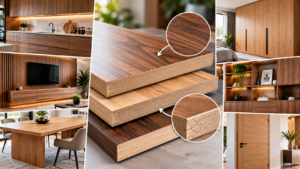
One major advantage of veneered MDF is the combination of appearance and dimensional stability. Solid timber expands and contracts as its moisture content changes. MDF also responds to environmental conditions, but its engineered construction provides a relatively consistent substrate.
A properly manufactured veneered MDF panel can therefore be useful for:
- fitted furniture
- wardrobes
- kitchen and utility-room cabinetry
- shelving
- media units
- wall panelling
- interior doors
- desks and tables
- built-in storage
- decorative joinery
The material also provides a consistent surface for finishing. Because the MDF substrate is smooth, manufacturers can produce clean, accurately machined components while the veneer supplies the visual character of timber.
For a homeowner planning fitted furniture, veneered MDF can offer a useful middle ground between a basic decorative board and a piece constructed entirely from solid wood.
For more insights, you can read our previous article here: Mosaic Tiles Bathroom.
Veneered MDF vs Solid Wood
The choice between veneered MDF and solid timber depends on the project, not on one material being universally superior.
| Feature | Veneered MDF | Solid wood |
|---|---|---|
| Visible surface | Real wood veneer | Solid timber |
| Core | MDF | Timber throughout |
| Appearance | Natural wood grain | Natural wood grain |
| Dimensional behaviour | Relatively stable but moisture-sensitive | More noticeable seasonal movement |
| Machining | Generally consistent | Depends on species and grain |
| Repairs | Veneer can limit sanding depth | Usually allows deeper sanding |
| Cost | Often less material-intensive | Can be substantially more expensive |
| Suitable for | Furniture, panels, cabinetry | Furniture, structural and decorative applications |
The important distinction is that veneered MDF is not simply “cheap solid wood”. It is a different construction method with its own strengths and limitations.
Solid timber can be particularly attractive when deep refinishing, exposed edges, or traditional joinery matter. Veneered MDF can make more sense when you need a large, flat, stable-looking panel.
Where Is Veneered MDF Commonly Used?
Furniture and Cabinets
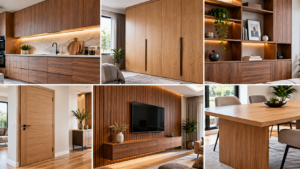
Furniture makers often use veneered MDF for cupboard doors, carcasses, shelves and decorative panels. The smooth substrate is particularly convenient for accurate cutting and routing.
Edges require attention, however. A panel with a natural veneer face can still reveal an MDF edge unless it has been covered with matching veneer, solid timber edging or another suitable treatment.
Wall Panelling
Veneered MDF can also be used for decorative wall panels. Oak and walnut finishes, for example, can introduce natural grain without requiring large quantities of solid timber.
In European homes, consider moisture conditions carefully. A material intended for a dry living room should not automatically be assumed suitable for a consistently damp bathroom or poorly ventilated area.
Doors and Interior Joinery
Interior doors, screens and built-in joinery can use veneered panels where a natural timber appearance is desired. Choose the final finish based on expected wear, cleaning requirements, and moisture exposure.
Is Veneered MDF Waterproof?
Standard veneered MDF should not be treated as waterproof. Both the MDF substrate and the veneer construction need protection from prolonged moisture.
Moisture-resistant MDF products are designed for specific environments, but “moisture-resistant” does not mean a panel can remain wet or be exposed to uncontrolled water indefinitely.
For kitchens, utility rooms, or other areas where occasional splashes are possible, careful edge sealing and appropriate finishing are important. In bathrooms and other high-humidity environments, check the manufacturer’s suitability information before installation.
If water repeatedly reaches an unprotected edge, the MDF core can absorb moisture and swell. Once swelling is substantial, refinishing the visible veneer may not restore the panel to its original dimensions.
How Durable Is Veneered MDF?
The durability of veneered MDF depends heavily on construction and finish.
A high-quality panel with a well-bonded veneer and appropriate protective coating can perform well in normal interior applications. However, the thin veneer layer is not equivalent to a thick solid timber surface.
Heavy impacts, deep scratches and aggressive sanding can expose the MDF underneath. Furniture in high-traffic areas therefore benefits from a finish appropriate to the expected level of use.
For tables, desks and frequently handled cabinet doors, consider the surface coating as part of the material specification rather than treating the veneer alone as the finished product.
How to Clean and Maintain Veneered MDF
Routine maintenance is relatively simple. Dust the surface regularly with a soft, dry or lightly damp cloth, depending on the manufacturer’s care instructions.
Avoid saturating the panel with water. Wipe up spills rather than letting them sit around joints and edges.
For routine care:
- Remove dust and loose dirt with a soft cloth.
- Gently wipe marks with a slightly damp cloth, if suitable for the finish.
- Dry the surface afterward if you used moisture.
- Avoid abrasive pads and aggressive cleaners.
- Follow the furniture or panel manufacturer’s instructions for specialist finishes.
Direct sunlight can also gradually alter the color of natural wood veneer. This is normal for many timber species, although the degree of change varies with the wood and finish.
What Are the Main Drawbacks?
The biggest limitation of veneered MDF is its vulnerability to moisture and damage to the veneer layer.
Another consideration is repairability. A scratch through a thin veneer cannot always be sanded away in the same way as a scratch in a thick solid-wood component. Excessive sanding may remove the veneer entirely.
Panels can also show visible variation because natural wood is not perfectly uniform. Grain matching and color matching are manufacturing considerations, particularly when several large cabinet doors are installed together.
The MDF core itself can also be relatively heavy. This matters when designing large doors, wall-mounted furniture, or components that need to be handled during installation.
What Should You Check Before Buying?
When choosing veneered MDF, don’t judge the material solely by the photograph or color sample.
Check:
- the veneer species and grade
- veneer thickness where specified
- MDF core specification
- moisture suitability
- panel thickness
- edge-treatment options
- surface finish
- formaldehyde or emissions information where relevant
- manufacturer installation instructions
- whether matching panels and edging are available
For European projects, documentation and product declarations can be useful, particularly for larger renovation or commercial interiors. If environmental credentials matter, look for credible certification rather than relying on marketing language alone.
Is Veneered MDF a Good Choice for a Home?
For many dry interior applications, veneered MDF can be a practical choice. It provides a genuine wood surface while offering the consistent manufactured core needed for many furniture and joinery applications.
It is particularly useful when the project needs broad, flat panels, accurate machining and a coordinated timber appearance. It becomes less suitable when the panel will experience persistent moisture, severe abrasion, or conditions outside the manufacturer’s stated application.
The best decision comes from matching the panel construction to the room, expected use and finishing system rather than choosing solely on appearance or price.
Frequently Asked Questions
Is veneered MDF real wood?
Yes. The visible veneer is a thin layer of real wood, although the underlying panel is MDF. The final appearance therefore combines natural timber grain with an engineered wood-fiber core.
Can veneered MDF be painted?
It can be painted, but preparation depends on whether the surface is natural veneer, already finished, or supplied unfinished. Edges and any exposed MDF require appropriate preparation before painting.
Can veneered MDF be used in a kitchen?
It can suit many kitchen applications, particularly away from areas exposed to persistent water. Check the specific panel, finish, and edge treatment for the intended environment.
Can you sand veneered MDF?
Light sanding may be possible when preparing or refinishing an appropriate surface, but the veneer is thin. Aggressive sanding can remove the wood layer and expose the MDF core.
Is veneered MDF cheaper than solid wood?
It can be, particularly where large panels are required, because only the visible surface uses natural timber. Actual costs vary according to wood species, veneer quality, panel specification, finish, manufacturing, and local labor.
How long does veneered MDF last?
No single lifespan applies to every panel. Properly manufactured and maintained material can remain serviceable for many years indoors, but durability depends on moisture exposure, impact, surface finish, construction quality, and how the furniture or joinery is used.



One Comment