
Garden Office with Shed: Practical Design Guide for Europe
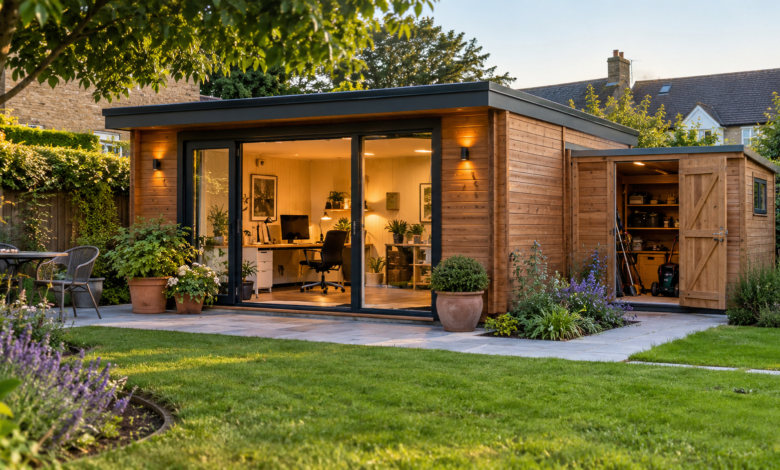
A garden office with a shed combines a dedicated workspace with useful storage for bikes, tools, lawn equipment and seasonal items. The best designs separate the two functions so the office stays quiet, clean and comfortable while the shed remains easy to access.
For European homeowners, the right solution depends on garden size, climate, construction method and local planning rules. This guide covers layout, insulation, ventilation, services, security, maintenance, cost factors and permissions, with country-specific examples where rules differ.
What Is a Garden Office with Shed?
A garden office with shed is an outdoor building divided into two practical zones: an insulated office for regular work and a storage area for equipment that doesn’t belong indoors. You can build it as a side-by-side unit, a front-and-back arrangement, or an L-shaped structure.
A solid internal partition is usually worthwhile. It limits dust and cold air entering the office and lets the storage area have a wider, more robust door. Separate entrances are particularly useful when bicycles, bins or garden machinery need frequent access.
Plan the office around real furniture dimensions. Measure the desk, chair, shelving and equipment before choosing the building size, then leave enough circulation space to use doors and drawers comfortably.
Garden Office with Shed Layout Ideas
A side-by-side layout suits wider gardens. One half can have the main glazing and desk, while the storage half has a wider external door.
A front-and-back layout can suit a narrow plot, while an L-shaped design can create a sheltered corner but uses more ground space.
Consider the route from the house to the storage door, sunlight, privacy, and how the building affects neighboring properties.
Plan the Storage First
Storage is often underestimated. Decide whether the shed will hold bicycles, mower equipment, bins, ladders, tools or only small garden items. Bulky equipment needs wider access than boxes and hand tools.
Keep frequently used items near the entrance and heavier items low. Avoid placing tall shelving where it blocks the office window or creates a narrow escape route.
Does a Garden Office with Shed Need Planning Permission?
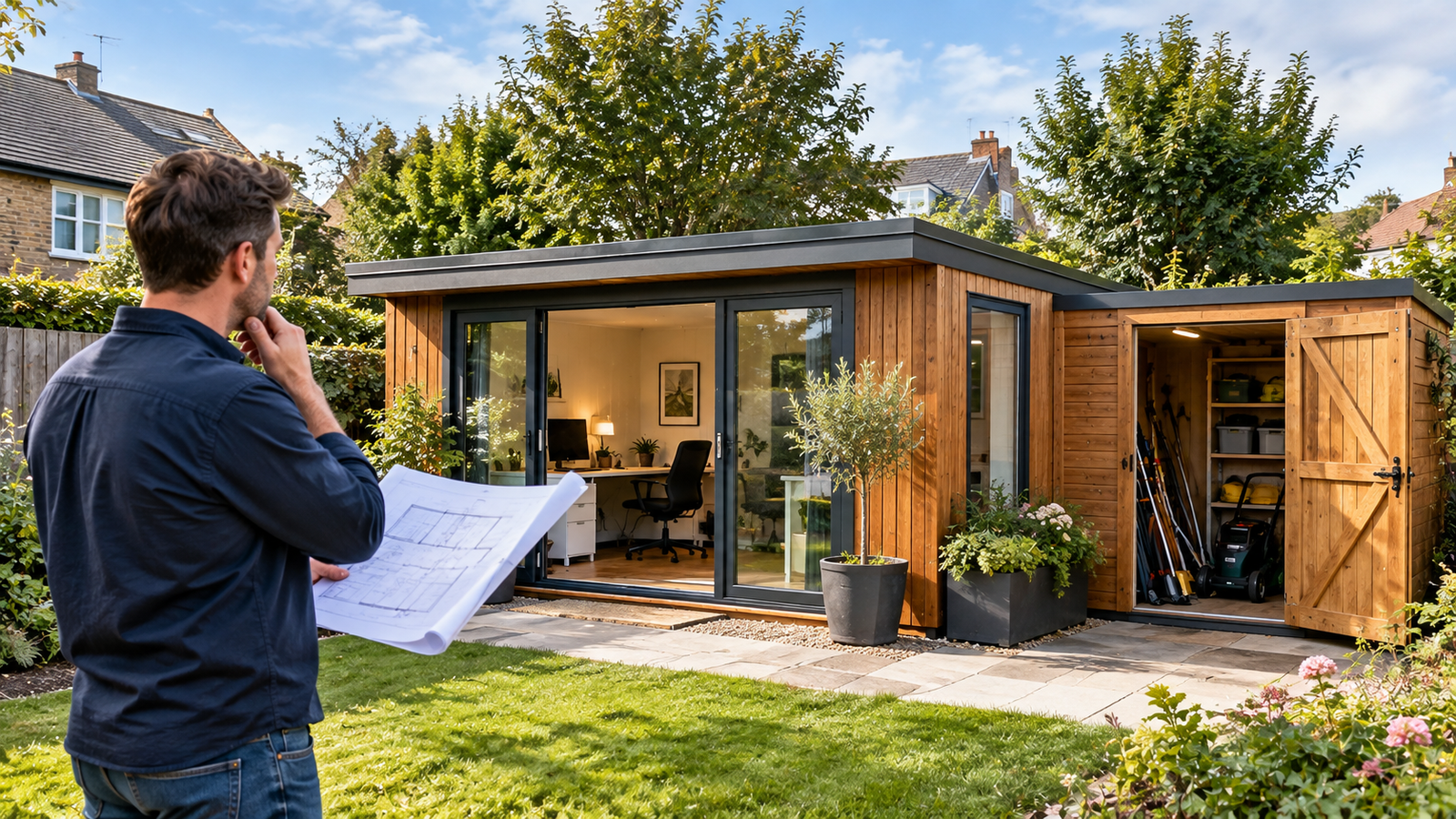
There is no single European planning rule. Requirements vary between countries and can also depend on the property, location, size, use and local restrictions.
In England, qualifying detached outbuildings can fall under permitted development if they meet all relevant conditions. Planning Portal guidance includes limits covering location, height, boundary proximity and the amount of land covered. The rules do not apply in the same way to flats and maisonettes, and listed buildings or properties affected by other restrictions may need separate consideration.
For a garden office with a shed in England, use also matters. Planning Portal says permission may become relevant if home working creates a material change of use, significant additional traffic, unusual activity or unreasonable disturbance.
Ireland has a separate planning system. Government information published in 2026 refers to an exemption for a back-garden structure such as a shed, home office or gym, with the exempted floor area increased to 30 square meters. Conditions still apply, so Irish owners should check the current rules before relying on the exemption.
Germany, France, the Netherlands, Spain and other European countries have their own rules. Conservation areas, protected buildings, boundary distances and local development controls can change the answer. Do not treat an English size limit as a European standard.
For more insights, read our previous article: Loft Bedroom Design Trends 2026.
Making a Garden Office with Shed Comfortable All Year
A basic shed shell is rarely enough for regular office use; the workspace needs insulGarden Officeation, ventilation, weather protection, daylight and suitable heating.
Insulate the office walls, roof and floor according to the construction system. Pay particular attention to junctions around doors and windows because gaps can undermine otherwise good insulation.
Ventilation is equally important because warm indoor air can produce condensation on cold surfaces. Insulation, ventilation and heating should be designed as one system.
Glazing should suit the climate: colder regions need good weather detailing, while southern European gardens may need shading to limit summer overheating.
For a garden office with a shed used during winter, choose heating based on the insulated room rather than the building’s marketing description. Electrical installations should meet applicable national requirements; an appropriately qualified electrician should handle new circuits and significant work.
Power, Lighting and Internet
Plan services before you close the walls. An office may need power for computers, networking and lighting, while the shed may need separate lighting or sockets.
Do not improvise outdoor electrical connections or buried cables. The correct installation method depends on the property and national rules, and electrical work can present serious fire and shock risks.
If Wi-Fi is weak at the end of the garden, plan a reliable network connection rather than accepting an unstable signal.
Foundations, Materials and Moisture
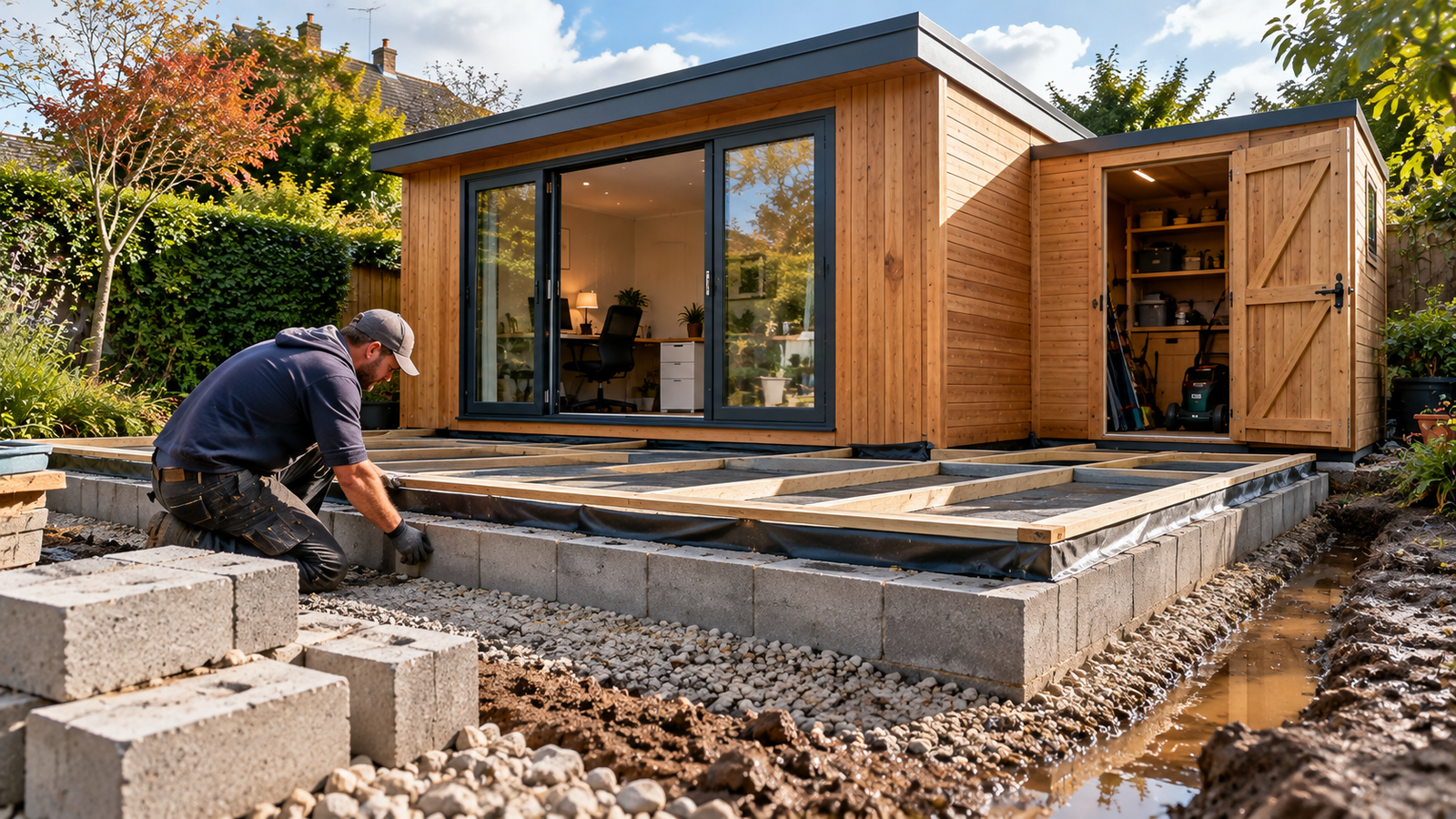
The base must suit the building, ground conditions and structural design. A level, stable foundation helps doors stay aligned and reduces movement, but choose the right foundation for the site.
Timber can give a natural appearance, while other finishes may reduce maintenance. Whatever material is chosen, manage water shedding, drainage, and protection around the base.
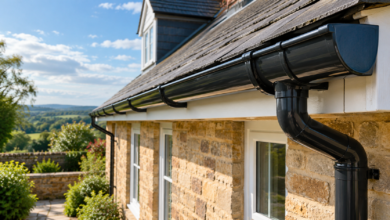
Keep gutters and drainage clear, prevent soil and leaves from remaining against vulnerable materials, and inspect the lower walls after heavy rain.
A garden office with a shed should also have a storage floor that can tolerate muddy boots and outdoor equipment without transferring unnecessary moisture into the office area.
Security and Everyday Storage
The storage side needs security appropriate to what you keep inside. A robust door, suitable locks, secure windows and sensible exterior lighting can reduce opportunities for theft.
Do not position ladders, tools or stored items where they can easily be used to reach a window or roof. Valuable bicycles and equipment may also benefit from suitable internal anchoring.
Keep tools, soil, wet boots and garden chemicals in the storage zone. Follow product labels, and don’t assume a shed is suitable for every hazardous substance.
Garden Office with Shed Maintenance
Inspect the roof, gutters, drainage, external finish, seals, locks and doors periodically, especially after severe weather.
Watch for condensation, musty smells, staining or mould. These signs can indicate excess moisture, poor ventilation, water ingress, or cold surfaces.
Seasonal checks are useful: clear gutters and inspect the roof before wetter weather, then check finishes and drainage in spring.
For a garden office with shed, keeping the surrounding ground clear of excessive vegetation also improves inspection access and helps identify drainage or exterior-wall problems early.
Garden Office with Shed Cost Factors
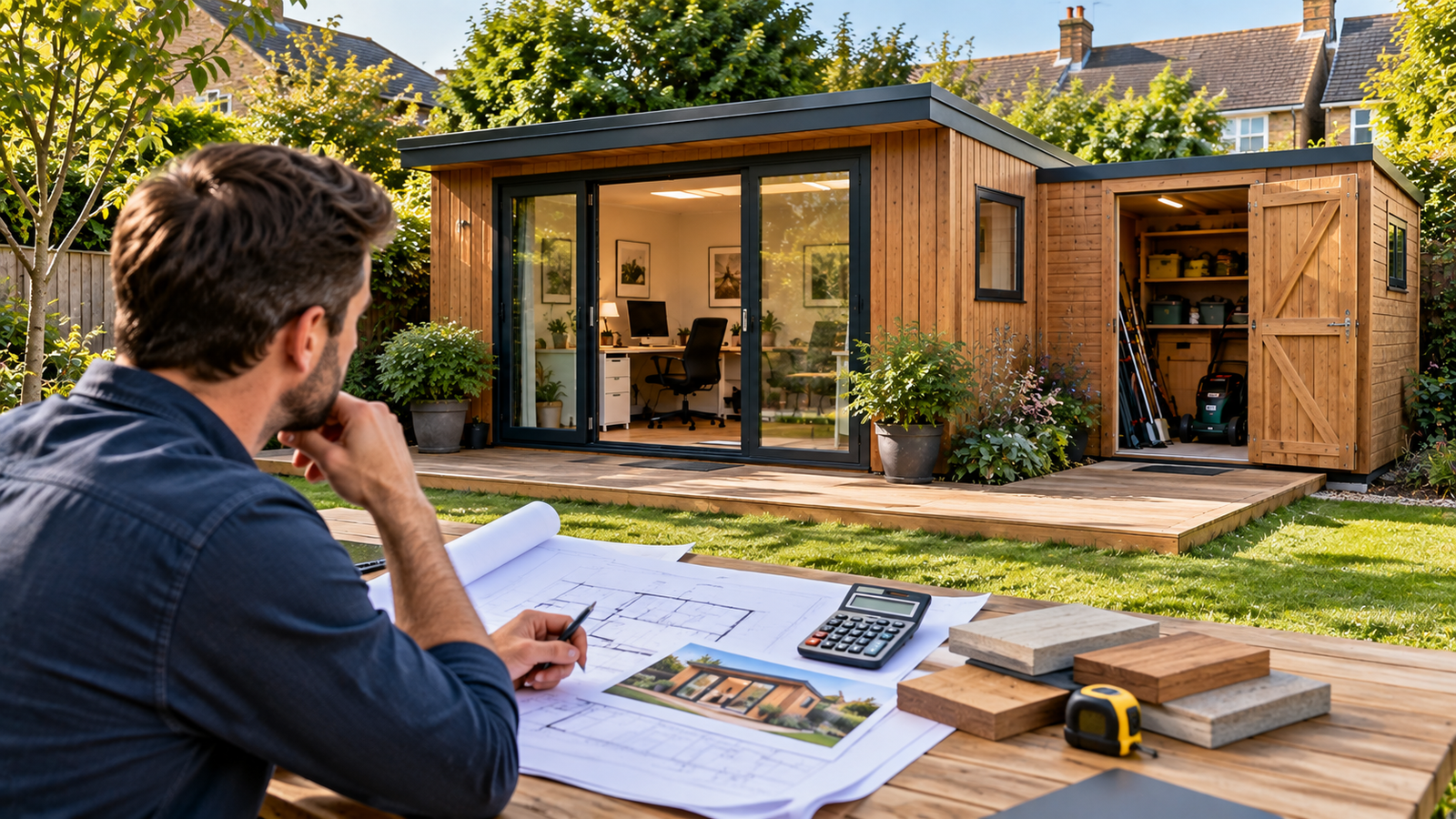
Avoid comparing buildings by the shell price alone. A realistic project budget may include the structure, foundation, insulation, doors and windows, internal finishes, electrical installation, internet, heating, drainage, furniture and storage fittings.
Access can affect the project: a wide side gate may make delivery easier than a restricted urban garden.
European prices vary substantially by country, city, labor rates, materials and project complexity. Instead of relying on a generic online figure, request itemized quotations and check whether the base, services, insulation and internal finishing are included.
When This Combined Design May Not Suit You
A combined building is not always the best arrangement. If storage equipment is used constantly during working hours, noise and traffic may disturb the office. A very small garden can also feel cramped once you account for access paths and maintenance space.
Renters should check their tenancy agreement and obtain any required landlord consent. Lease, freeholder, conservation and insurance conditions can matter independently of planning permission.
If the project involves substantial excavation, structural questions, a protected building, significant electrical work or a possible change of use, obtain appropriate professional advice before construction.
Frequently Asked Questions
Can a Garden Office with Shed Be Used Throughout the Year?
Yes. The office needs appropriate insulation, ventilation, weather protection, heating, and moisture control. A simple uninsulated shed may be comfortable for occasional summer use but is unlikely to provide the same conditions as a properly designed workspace.
Does a Garden Office with Shed Need Planning Permission?
It depends on the country and property. England has permitted-development rules for qualifying outbuildings, while Ireland and other European countries use different requirements. Always check the applicable local authority rules before construction.
Can the Office and Shed Share One Roof?
Yes. A shared roof can create an efficient footprint and a visually consistent building. The two zones should still have suitable separation, drainage, and access, particularly where the storage area is exposed to mud and wet equipment.
How Should I Insulate a Garden Office with Shed?
Insulate the office walls, roof and floor in a way that suits the construction system and local climate. Focus on doors, windows, junctions, and moisture control rather than insulation thickness alone.
Is a Garden Office with Shed Suitable for Bicycles and Garden Tools?
Yes, if the storage zone has enough door width, floor space, and security. Put frequently used equipment near the entrance and use stable shelving or suitable anchors for heavier or valuable items.
What Should I Check Before Building a Garden Office with Shed?
Check planning or exempted-development rules, boundary position, property restrictions, drainage, access, foundation requirements, electrical needs and whether building regulations apply. Also check landlord, lease, and insurance requirements where relevant.




One Comment